

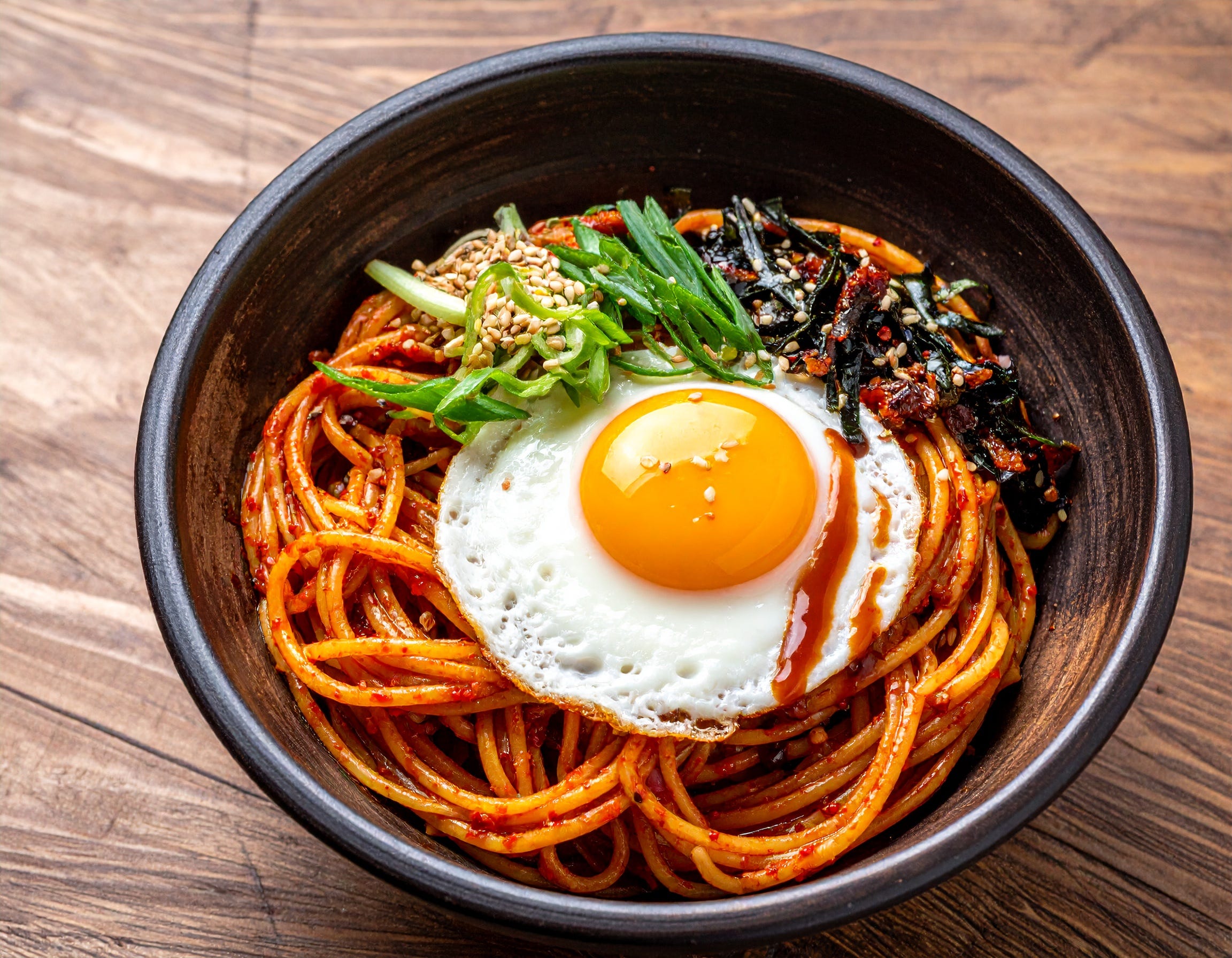
This is the recipe for the nights when there is almost nothing in the fridge and thirty minutes feels like too long. Fifteen minutes, one pan, five core ingredients, and a result that tastes far more considered than the effort involved. The gochujang caramelizes in the butter and does the work of an entire spice cabinet. The egg yolk finishes the sauce. You just have to let it happen.
Serves 2 — 15 minutes
Ingredients
For the pasta
7oz spaghetti or linguine
3 tablespoons unsalted butter, cold, cut into cubes
2½ tablespoons gochujang
3 cloves garlic, minced
1 cup pasta cooking water, reserved before draining — do not skip this
For the eggs
2 large eggs, at room temperature
1 tablespoon neutral oil
Flaky sea salt
To finish
2 teaspoons toasted sesame oil
2 scallions, thinly sliced on the diagonal
1 tablespoon sesame seeds, toasted in a dry pan until golden
Gochujang, thinned with a little water, for drizzling — optional but good
Chili flakes — optional
Flaky sea salt
Method
Bring a large pot of water to a rolling boil. Salt it heavily — more than feels comfortable, more than feels right. The water should taste unmistakably of salt, somewhere between mild broth and seawater. This is not optional seasoning. It is the only opportunity to season the pasta itself from within, and no amount of sauce applied afterwards will correct under-salted pasta. Properly salted pasta water is the foundation of the dish.
Cook the spaghetti according to the packet instructions until just short of al dente — one minute less than the recommended time. The pasta will finish cooking in the sauce and absorb its flavor as it does. Before draining, use a mug to scoop out at least a full cup of the cooking water and set it beside the stove where you can reach it easily. This cloudy, starchy liquid is an emulsifier — it will bind the butter and gochujang into a glossy, cohesive sauce that clings to every strand rather than pooling at the bottom of the bowl. Tap water cannot replace it. Do not pour it down the drain.
While the pasta cooks, build the sauce. Place a wide, heavy pan — large enough to toss the pasta comfortably — over medium heat. Add two tablespoons of the butter and let it melt slowly, swirling the pan occasionally. When the butter is fully melted and beginning to foam, add the gochujang. It will sizzle on contact. Stir it immediately and continuously into the melting butter — press and spread it across the surface of the pan with the back of a spoon. Cook for two full minutes, stirring constantly, until the gochujang has darkened slightly from its original bright red to a deeper, more burnished color, and the kitchen smells intensely fragrant rather than raw. This blooming step is not decorative — it releases the fat-soluble aromatic compounds in the gochujang that are responsible for most of its depth and complexity. Added directly to liquid without this step, it tastes flat by comparison.
Add the minced garlic to the bloomed gochujang butter and cook for one minute, stirring constantly. The garlic should soften and become fragrant without browning — browning at this stage would introduce bitterness that the dish does not need.
Add the drained pasta directly to the pan. Add a generous splash of the reserved pasta water — approximately a quarter cup to start — and toss everything vigorously with tongs or a pasta fork. The starch in the water will begin emulsifying immediately with the butter and gochujang, pulling everything together into a sauce that coats the pasta rather than sitting beneath it. Add the remaining tablespoon of butter in two or three small cubes and continue tossing as it melts — cold butter going into a hot sauce mounts it, adding gloss and body in the same way a professional kitchen finishes every pan sauce. Add more pasta water a splash at a time, tossing continuously, until the sauce is just loose enough to coat every strand generously. The pasta should look almost overdressed at this stage — it will absorb the sauce as it sits.
Taste. It should carry the gochujang’s complex heat and sweetness, with a deep savory richness from the butter and a clean salt from the cooking water. If it tastes flat, add a pinch of salt and toss again. If the heat is too forward, the egg yolk will moderate it. Remove from the heat.
Fry the eggs while the pasta rests. Heat the neutral oil in a small pan over medium-high heat until shimmering and on the verge of smoking — the oil must be genuinely hot or the whites will spread thin and the edges will not crisp. Crack the eggs in carefully, one at a time, keeping them separate. Cook for two to two and a half minutes without touching them. The whites should be fully set and opaque, the edges lacy and golden-brown and slightly crisped — not pale and flabby — and the yolk completely runny when pressed gently with a fingertip. Season each egg with a small pinch of flaky sea salt directly over the yolk the moment it comes out of the pan.
Divide the pasta between two wide bowls, using tongs to twirl it into a nest — the presentation matters because the dish eats differently when the egg sits in a hollow rather than sliding off a flat pile. Place a fried egg directly on top of each bowl, centered in the nest. Drizzle a teaspoon of toasted sesame oil over each egg — do not substitute regular sesame oil, which lacks the deep, roasted, nutty quality that toasted sesame oil provides as a finishing fat. Scatter the sliced scallions generously over everything, then the toasted sesame seeds. Add a pinch of chili flakes if you want more heat. A thin drizzle of gochujang thinned with water over the egg is optional but adds a visual finish and a concentrated hit of flavor.
Break the yolk at the table. It runs through the pasta and enriches the sauce the way an egg yolk enriches a carbonara — adding body, richness, and a silkiness that transforms the dish from very good to genuinely extraordinary. A fully set yolk will not do the same thing. The yolk must be runny for the dish to work as intended.
Eat immediately. Pasta waits for no one.
Why this works
Gochujang is one of the most complex single-ingredient flavor additions available in the condiment cupboard. The fermentation process — months of slow development — produces an intensity that no fresh chili paste can replicate: heat, sweetness from the glutinous rice, and a deep fermented umami that sits underneath everything else and gives the dish its backbone. Blooming it in butter before anything else goes in caramelizes its sugars slightly and drives off the raw, sharp edges of the paste, leaving only the rounded, complex depth.
The pasta water emulsification is the technique that separates this from a bowl of pasta with a sauce sitting on top. Starch acts as an emulsifier, holding the fat in the butter and the water in the sauce in suspension rather than allowing them to separate. Vigorous tossing distributes the starch through the sauce and creates the glossy, clinging coating that a restaurant pasta has and a home kitchen pasta frequently lacks. The cold butter added at the end — mounted into the hot sauce off the heat — adds a final layer of gloss and body using the same principle as a classical beurre blanc.
The egg yolk is structural. It adds richness, body, and a silkiness that the butter alone cannot produce — the lecithin it contains is a powerful emulsifier that binds everything together when it breaks and runs through the hot pasta. This is the same mechanism that makes carbonara work. The lacy, crisped egg white provides textural contrast — something crispy against something glossy and soft — that makes the finished dish more interesting to eat.
The toasted sesame oil is the finishing fat. Added cold over the finished dish, it contributes a deep, roasted nuttiness that cooking fat cannot — heat destroys its aromatic compounds quickly, which is why it is always added last and never used for cooking.
Substitutions
Gochujang is genuinely not substitutable in this recipe. The fermented complexity is what makes the dish extraordinary. If you do not have it, order it rather than improvising — it is available at most Asian grocery stores and online, and it keeps for a year in the fridge. It is worth having permanently.
Any long pasta works — linguine, fettuccine, bucatini. Short pasta works technically but does not twirl into a nest and the presentation suffers. Long pasta is correct here.
No scallions? Thinly sliced shallot provides the same sharp allium note. Fresh chives work as a finishing herb. A small red onion, very thinly sliced and briefly soaked in cold water to soften its sharpness, works well.
No toasted sesame oil? Skip it entirely rather than substituting untoasted sesame oil, which is pale and flavorless by comparison. The dish is very good without the toasted sesame oil. It is better with it.
Want to add a vegetable? Wilt a large handful of spinach through the pasta in the last minute of tossing. Add a handful of frozen edamame to the boiling pasta water two minutes before the pasta is done and drain together. Thinly sliced mushrooms sautéed separately in butter until golden and added on top of the egg — alongside or instead of the scallions — work particularly well.
Storage
Make it fresh and eat it immediately. The pasta absorbs the sauce as it sits and loses its glossy coating within twenty minutes of plating. The lacy, crisped egg white softens within minutes. The toasted sesame oil loses its aromatic punch as it warms and integrates. This dish is designed for the moment it is made — fifteen minutes from a cold pan to the table, eaten immediately, with the yolk broken at the table.
If there is leftover pasta without the egg, reheat it in a pan over medium heat with a splash of water and a small knob of cold butter, tossing until the sauce loosens and the emulsification is restored. It will not be as good as fresh. It will still be better than most things you could make in five minutes.