
How food became a personality — and why that’s a problem
When did dinner become a statement?

There is a question worth sitting with for a moment before we get into the argument.
Think about the last time you told someone what you eat — not in response to a direct question, not because it was practically relevant to a meal you were sharing, but voluntarily, as a way of communicating something about yourself. Maybe you mentioned you were vegan at a party. Maybe you brought up that you do not eat gluten in a conversation that did not require it. Maybe you described your approach to food — intermittent fasting, plant-based, whole thirty, whatever it is — in a context where the information was not strictly necessary but felt, for some reason, important to share.
If you have done this — and most people who care about food have, at some point — it is worth asking what you were actually communicating. Not the surface content, not the dietary information, but the thing beneath it. What were you telling the other person about who you are?
Because that is what food has become for a significant and growing number of people. Not just fuel, not just pleasure, not just sustenance. A communication. A signal. A way of saying something about your values, your intelligence, your consciousness, your priorities — using what is on your plate as the medium.
This is new. And it is a problem.
A brief history of food as identity
Food has always carried cultural meaning. This is not new and it is not a problem. Every cuisine in the world is a record of a culture’s history and values and relationship with its environment. What you eat has always communicated something about where you come from, what your family does, what your community celebrates. Food as cultural identity is ancient, meaningful, and worth preserving.
What is new is food as individual identity — the idea that your personal dietary choices, independent of cultural tradition, communicate something essential about you as an individual. That the specific foods you eat and avoid are a window into your values, your intelligence, your level of consciousness about health and environment and ethics.
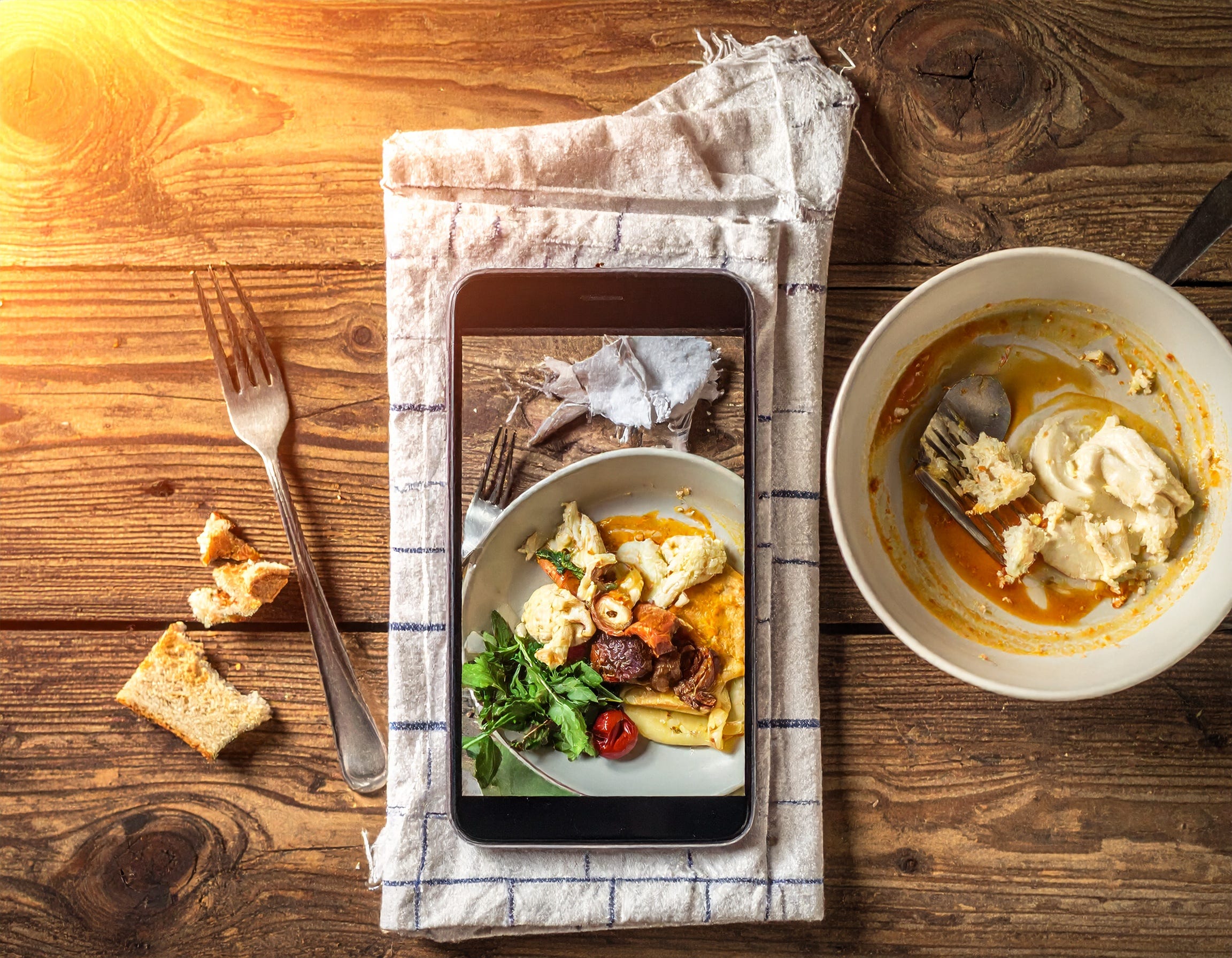
This development has a rough origin point: the clean eating movement of the early 2010s, which emerged from an earlier wave of alternative health thinking and found its distribution infrastructure in Instagram. Clean eating was not just a dietary approach. It was an aesthetic — white bowls, green smoothies, carefully arranged ingredients, a visual language that communicated a particular kind of lifestyle and a particular kind of self. The food was not just food. It was a portrait of a person.
From clean eating, the food-as-personality dynamic spread and diversified. Veganism acquired an identity layer beyond its ethical core. Paleo, keto, carnivore, raw food, low-FODMAP, intuitive eating — each developed not just dietary guidelines but aesthetics, communities, vocabularies, and identity frameworks. Each offered not just a way of eating but a way of being, a tribe to belong to, a self to perform.
By the time social media had fully matured, food had become one of the primary arenas in which identity is constructed and performed online. What you eat is content. What you avoid is a statement. The meal you photograph and share is a communication to your audience about who you are, or who you want them to think you are.
The specific problems this creates
The transformation of food into personality generates problems at multiple levels — in individual relationships with eating, in social dynamics around food, and in the broader culture of health and nutrition.
It makes eating anxious.
When food is identity, every meal carries a weight it was not designed to carry. The simple act of deciding what to eat for dinner becomes freighted with questions of self-expression and values alignment. Are you being true to your dietary identity? Are you making the choice that the person you want to be would make? Is this meal consistent with the self you are performing?
This anxiety is low-grade and largely unconscious for most people, which makes it harder to identify and address. It shows up as a vague discomfort around food decisions, a tendency to overthink what should be straightforward choices, a feeling that eating the wrong thing is somehow a failure of character rather than just a less optimal nutritional choice.
It makes social eating complicated.
Food as personality creates friction in shared eating situations that did not exist when food was just food. The dinner party where half the guests have incompatible dietary identities. The restaurant where the menu becomes a negotiation between competing frameworks rather than a straightforward selection from available options. The family meal where what is being eaten is less important than what each person’s choices communicate about their values.
These complications are not trivial. Shared eating is one of the primary mechanisms of human connection — the way families bond, the way friendships deepen, the way communities cohere. When eating together becomes complicated by identity performance, something genuinely important is lost.
It creates a hierarchy where none should exist.
Food as personality inevitably generates comparison and judgment, because identities are evaluated against each other. If your dietary choices communicate your values, then people whose dietary choices differ from yours are, implicitly, people with different — and by your framework’s logic, lesser — values.
This hierarchy is usually not stated directly. It lives in small signals — the slight hesitation before eating something at a party where the other guests eat differently, the careful explanation of why you make the choices you make, the tone in which you discuss other people’s eating. It damages relationships and creates divisions along lines that are ultimately arbitrary, built on the accident of which dietary framework each person happened to encounter and adopt.
It separates people from their actual experience of food.
Perhaps the most insidious cost is this: when eating is performance, the experience of eating gets lost. You are not tasting the food. You are managing its meaning. You are not enjoying the meal. You are ensuring it is consistent with your identity. The pleasure, the presence, the genuine sensory experience of eating something good — all of this recedes behind the layer of self-conscious management that identity performance requires.
And pleasure, as we have argued elsewhere in the Joyvela archive, is not incidental to eating well. It is central to it. Remove it and you have removed the thing that makes nourishing eating sustainable over a lifetime.
The difference between caring about food and making food your personality
This argument is not a case for indifference to food. Caring genuinely about what you eat — wanting it to be nourishing, wanting to cook it well, wanting it to be a source of pleasure rather than just fuel — is entirely compatible with everything argued here.
The distinction is between caring about food and making food your personality. Between having strong preferences and organizing your sense of self around those preferences. Between eating with intention and eating as performance.
The person who cooks thoughtfully, eats nourishing food most of the time, genuinely enjoys what they eat, and has a relaxed and flexible approach to the inevitable imperfections of real-life eating — that person cares about food. But food is not their personality. It is a part of their life, well-managed and pleasurable, without being the primary lens through which they understand themselves or present themselves to others.
This person is more pleasant to eat with, more flexible in social situations, more resilient when their eating is disrupted, and — perhaps most importantly — more actually present to the experience of eating, because they are not simultaneously managing the performance of a dietary identity.
What to do with this
The practical implication of this argument is not that you should stop caring about food or stop having preferences or abandon any framework that currently structures your eating. It is that you might benefit from examining the relationship between your dietary choices and your sense of self — gently, without judgment, with genuine curiosity.
Ask yourself: if you ate differently for a week — not badly, just differently — would it feel like a threat to something important? If the answer is yes, it is worth exploring what that something is. Because it is probably not your health. Health is resilient and does not depend on any particular week of eating. If a week of different eating feels threatening, what is threatened is likely the identity, not the body.
Ask yourself: do you find yourself bringing up your dietary choices in contexts where they are not practically relevant? If so, what are you communicating, and why does it feel important to communicate it?
Ask yourself: is your relationship with food a source of genuine pleasure and ease, or is it a source of vigilance and self-consciousness? If the latter, the identity layer may be doing more harm than good.
These are not comfortable questions. They do not have easy answers. But they are worth sitting with, because the freedom that comes from separating what you eat from who you are is significant — and it is a freedom that makes eating well, genuinely and sustainably, considerably more possible.
Where Joyvela stands
We publish recipes. We share knowledge about ingredients and cooking. We make the case for eating in ways that nourish you and bring you genuine pleasure.
We do not publish a lifestyle. We do not ask you to adopt a dietary identity or join a tribe or signal your values through your plate. We do not think your dinner says anything essential about who you are.
What we think is that dinner should be good — nourishing and delicious and made with reasonable care — and that it should then be eaten and enjoyed and cleared away, leaving room for the rest of your life to be about everything that actually defines you.
Dinner is not a statement. It is dinner. Make it a good one.