
How social media changed the way we think about food — and not for the better
The camera changed everything. Not all of it was good.

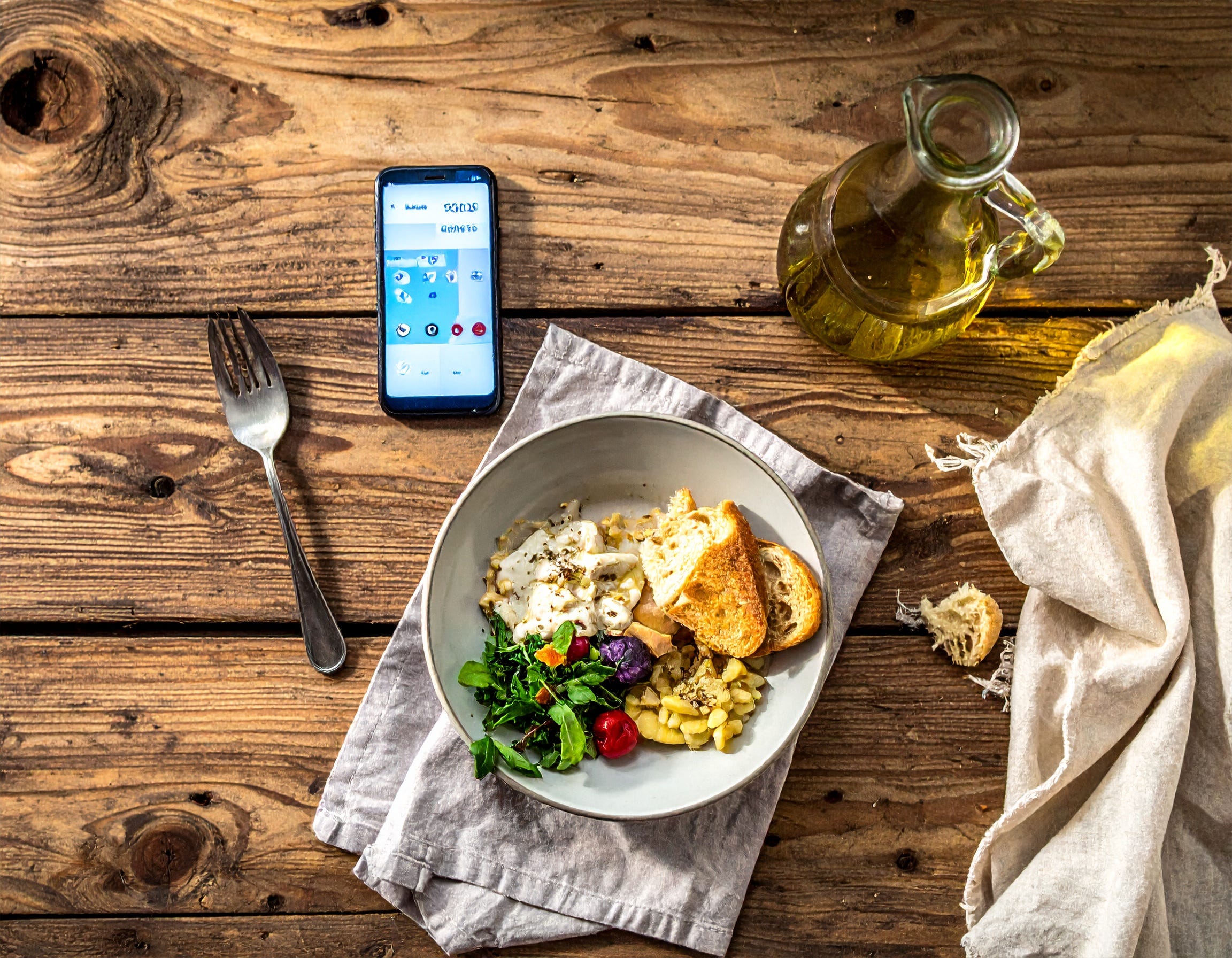
There is a meal that exists only on social media.
It is always perfectly lit, usually from above, with ingredients arranged in a way that no one actually arranges ingredients before eating. The colors are saturated — deep greens, bright oranges, vivid purples — chosen partly for nutritional value and partly, or perhaps mostly, because they photograph well. The bowl is ceramic, wide and shallow, probably expensive. The background is either a marble surface or worn wood, depending on the aesthetic the account has committed to. There is a linen napkin, artfully crumpled. There might be a small vase of flowers, or a coffee cup held just so, or a hand entering the frame from one side to provide scale and the suggestion of a human life being lived around this meal.
The meal looks extraordinary. It also looks like no meal anyone has ever actually eaten.
This is the food of social media. And it has done something significant to the way all of us — not just the people who create it, but the people who consume it, which is almost everyone — think about food, eating, and what a healthy relationship with both looks like.
What social media did to food
Before social media, food was mostly a private act. You ate with your family, with friends, occasionally in public at a restaurant — but the meal was experienced by the people present and then it was over. It left no record. It was not compared to anyone else’s meal. It was not evaluated by an audience. It was just eaten.
Social media made eating public on a scale that had never existed before, and it made it competitive in a way that private eating never was. When meals are shared with audiences, they acquire dimensions they never had before. They become performances. They invite comparison. They are evaluated — implicitly, through likes and follows and comments, and explicitly, through the constant ambient awareness of what other people are eating and how it compares to what you are eating.
This shift from private act to public performance changed food in several specific ways.
It changed what we notice about food. Before photography was a part of every meal, people noticed taste, smell, texture, temperature — the sensory dimensions of food that constitute the actual experience of eating. After the camera became a constant presence, appearance joined the list and quickly moved to the top of it. Food began to be evaluated first on how it looked, which is an entirely new criterion that has no relationship to how nourishing or delicious the food actually is. The most photogenic meal and the most delicious meal are not the same meal. Social media trained us to optimize for the former.
It created aspirational eating. Aspirational content is the engine of social media — content that shows you a version of life slightly better than your own, producing the mild dissatisfaction that keeps you scrolling. Food content is extraordinarily well-suited to this dynamic, because food is personal, daily, and infinitely variable, which means the gap between what you eat and what you could be eating is always visible and always available to generate aspiration. The result is a constant ambient sense that other people’s eating is better than yours — more varied, more beautiful, more nutritious, more intentional — which produces the exact combination of inadequacy and desire that social media runs on.
It professionalized amateur cooking. Before social media, home cooking had no audience and therefore no standard beyond the practical one of feeding people adequately. Social media introduced a visual standard to home cooking that had previously existed only in professional food photography — a standard that most actual home cooking, made under real conditions by real people with real schedules, cannot meet. The gap between the food that appears on social media and the food that appears on most weeknight dinner tables has contributed to a pervasive sense that everyday cooking is somehow not enough.
It turned dietary choices into public statements. We have discussed this at length elsewhere in the Joyvela archive — the way food became identity, the way dietary choices became signals of values and lifestyle and tribal affiliation. Social media is the mechanism through which this happened. When you share what you eat, you are making a statement. When you make that statement repeatedly, across years and thousands of posts, it becomes a defining characteristic of your public self. The diet becomes the personality because the platform rewards consistent identity performance, and food is one of the most reliable and repeatable performances available.
The specific harms
The changes social media made to the way we think about food produced several specific and well-documented harms.
The comparison problem. Social media comparison and its effects on mental health are among the most researched phenomena in contemporary psychology. The food-specific version of this is less studied but operates on the same mechanism: constant exposure to idealized eating produces inadequacy, inadequacy produces anxiety, and anxiety around food produces exactly the kind of disordered relationship with eating that genuine health requires us to avoid. The person who scrolls through food content for thirty minutes a day is receiving a sustained message that their eating is insufficient — less colorful, less intentional, less virtuous — even if their eating is entirely adequate by any reasonable nutritional standard.
The misinformation pipeline. Social media food content is not regulated, not peer-reviewed, and not subject to any standard of accuracy. The most shareable food content is not the most accurate food content — it is the most emotionally resonant, the most dramatic, the most capable of generating the combination of fear and desire that produces engagement. This means that nutritional misinformation spreads faster and further than nutritional fact on social media, because misinformation tends to be more emotionally compelling. The food villain of the month — seed oils, lectins, whatever the current target is — spreads through food social media not because the evidence supports it but because the format rewards alarm.
The performance displacing the experience. When the meal is content before it is food, the experience of eating gets subordinated to the experience of producing the content. The meal is photographed before it is eaten. It is experienced first as a visual object to be optimized for the camera, and only second as a sensory experience to be tasted and enjoyed. For heavy food content creators, this displacement can become significant — the actual eating becomes almost incidental to the documentation of the eating, which is a profound inversion of what food is for.
The normalization of the abnormal. Social media food content disproportionately represents eating behaviors and aesthetics that are unusual — elaborate meal prep, highly specialized diets, expensive ingredients, restaurant-quality presentation in home kitchens. These things exist on social media not because they are typical but because they are interesting and aspirational. But the sheer volume of this content, consumed daily, can create the impression that these are normal standards of eating — that everyone else is meal prepping on Sundays and eating colorful grain bowls at their desks and cooking elaborate weeknight dinners from scratch. They are not. Most people eat much more simply and much more imperfectly than social media suggests, and the gap between the social media standard and the reality of most people’s eating is a significant and underacknowledged source of food anxiety.
What has been lost
The most significant thing social media changed about food is something harder to quantify than any of the above: the quality of attention we bring to eating.
Attention is what transforms eating from a biological necessity into an experience. It is what allows you to actually taste what you are eating, to notice when you are full, to experience the pleasure of food in a way that is genuinely satisfying rather than compulsive. It is what makes a simple meal cooked at home more nourishing, in the fullest sense, than an elaborate meal eaten while distracted.
Social media competes with that attention directly. The phone at the table — even when it is not actively being used to photograph the food — pulls attention away from the meal and toward the infinite scroll that is always one gesture away. The habit of documenting food before eating it inserts a layer of self-consciousness between the eater and the experience of eating. The background awareness of what other people are eating, maintained by daily exposure to food content, makes it harder to be simply present to what is in front of you.
The meal that is fully attended to — eaten without a phone, without an audience, without comparison or aspiration or performance — is a different experience from the same meal eaten with all of those things present. It is more satisfying, more nourishing, more genuinely pleasurable. Social media, by colonizing our attention around food, has made this kind of eating rarer and harder to access, even for people who genuinely value it.
How to use social media around food without being used by it
The answer is not to leave social media entirely, which is neither realistic nor necessary. It is to be deliberate about what you consume and what you create, and to maintain a clear distinction between social media food and actual food.
Curate deliberately. The food accounts you follow should make you feel inspired and capable, not inadequate and anxious. If an account consistently makes you feel worse about your own eating, it is not serving you. Follow people who cook the way you actually cook, or want to cook — imperfectly, practically, in real kitchens with real constraints. Unfollow the ones whose content, however beautiful, produces comparison rather than inspiration.
Separate documentation from experience. If you enjoy photographing food, photograph it — and then put the phone away and eat. The documentation and the experience can coexist without one displacing the other, as long as the sequencing is deliberate. The photo takes thirty seconds. The meal takes twenty minutes. The twenty minutes are the point.
Apply skepticism to nutritional claims. If a piece of food content tells you that a particular ingredient is dangerous, or that eliminating something will transform your health, ask what the evidence is and who is making the claim. The answer, in most cases on social media, is that the evidence is weak and the claim is being made by someone who benefits from you believing it. This does not mean all food content is wrong. It means that social media is not a reliable source of nutritional science, and consuming it as if it were is likely to produce confusion rather than clarity.
Measure your eating against your own experience, not against social media. The relevant question about your eating is not whether it looks like the eating on your feed. It is whether it makes you feel well, whether you enjoy it, whether it fits your life, whether it is sustainable over time. These are the actual metrics. They are invisible on social media, which is precisely why social media is a poor judge of whether your eating is good.
What Joyvela is trying to do differently
We exist on the internet, which means we are part of the ecosystem this article describes. We cannot pretend otherwise. But we can be deliberate about how we participate in it.
We try to write about food in a way that makes your actual eating feel more possible and more pleasurable, rather than making social media food feel like the standard your eating should meet. We try to offer recipes that look like something you would actually make on a Wednesday night, not something that requires three hours and a professional lighting setup. We try to write about food in a way that decreases anxiety rather than increasing it — that makes the world of eating feel larger and more forgiving rather than smaller and more demanding.
We are not immune to the dynamics we have described here. But we are trying, deliberately and consistently, to push against them. Because food should make you feel good — when you cook it, when you eat it, and when you read about it.
That is the standard we are holding ourselves to. Not the camera’s standard. Yours.