
How to Reheat Pasta Without Ruining It

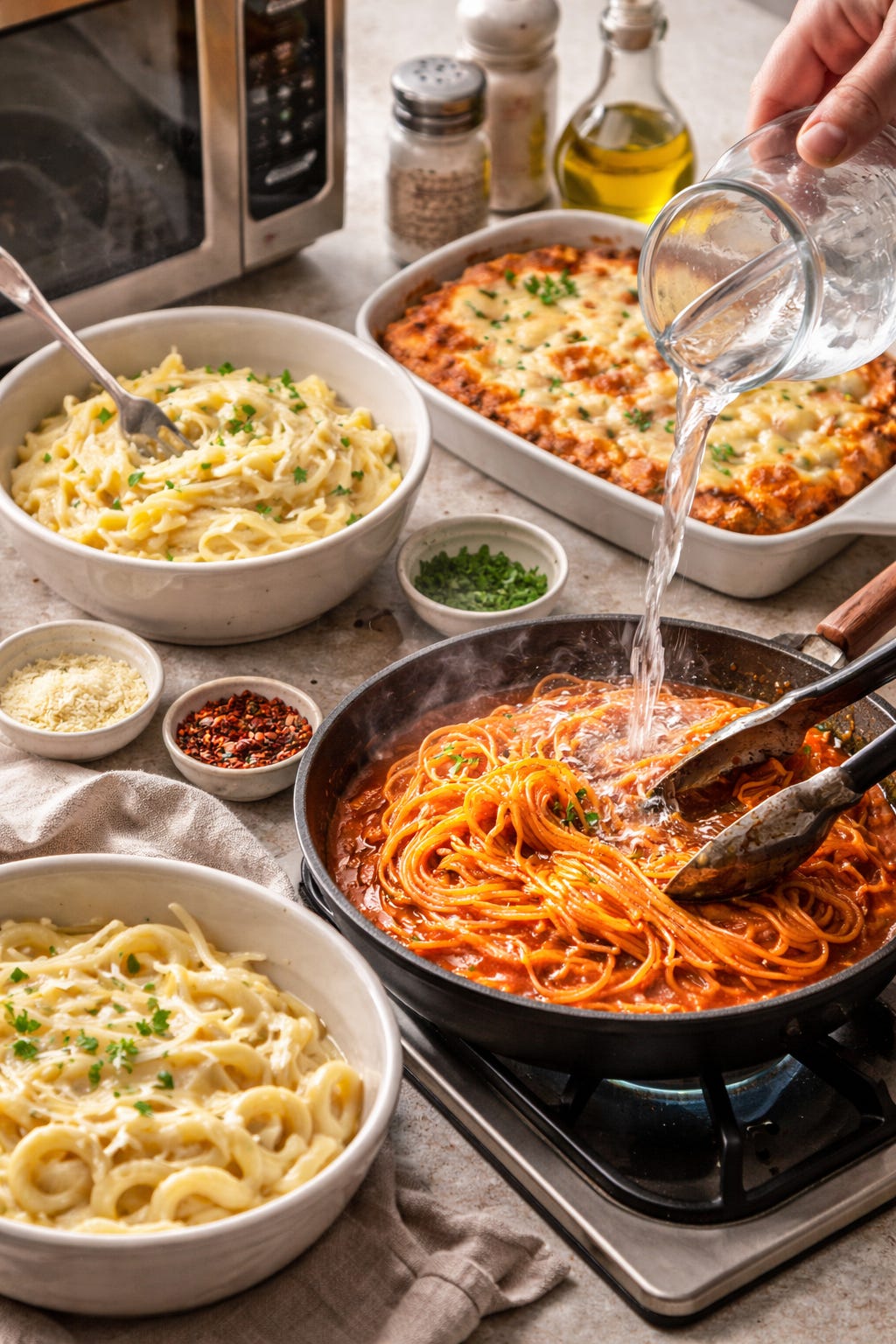
Leftover pasta has a lot of promise. It is already made, already waiting, and often smells just as good the next day when you open the container and start thinking about lunch or a quick dinner. Then the reheating goes wrong, and suddenly the noodles are dry, the sauce is clumpy, the cheese is rubbery, or the whole thing tastes like it gave up.
That is the frustrating part. Pasta should be one of the easiest leftovers to love, but it can turn disappointing very quickly if it is reheated without a little care. The good news is that it does not take much to make it better.
Once you know how to add moisture back in, use the right heat, and match the method to the kind of pasta you have, leftovers become much easier to enjoy.
Common issues with reheated pasta
Most pasta problems come down to one thing: it dries out.
Pasta keeps absorbing moisture as it sits, especially once it has been mixed with sauce and chilled. When you reheat it too aggressively, the sauce tightens, the noodles lose tenderness, and the whole dish can turn stiff or uneven.
Other common problems include:
microwaving too long
reheating at too high a temperature
not adding moisture
using the wrong method for the type of pasta
overheating creamy or cheesy sauces
Pasta is not difficult, but it is a little more delicate than people think.
The best way to reheat pasta depends on the kind
Not all pasta leftovers should be treated the same way.
A bowl of spaghetti with marinara, a creamy fettuccine, and a baked ziti all respond better to slightly different methods. If you match the reheating method to the type of pasta, you get a much better result.
How to reheat pasta in the microwave
The microwave is the fastest option, and for many everyday leftovers, it works perfectly well when done gently.
Best for
pasta with tomato sauce
simple noodle dishes
single servings
quick lunches
How to do it
Put the pasta in a microwave-safe bowl.
Add a splash of water, broth, or a little extra sauce.
Cover loosely with a microwave-safe lid or plate.
Heat in short intervals, about 30 to 45 seconds at a time.
Stir between each round.
Stop as soon as it is heated through.
That added moisture makes a real difference. It helps loosen the sauce and keeps the noodles from turning tough at the edges.
How to reheat pasta on the stove
The stovetop is often the best method when you want more control, especially for saucy pasta.
Best for
spaghetti
penne
rigatoni
pasta with red sauce
pasta with vegetables or protein mixed in
How to do it
Add the pasta to a skillet or saucepan.
Add a splash of water, broth, milk, or extra sauce depending on the dish.
Warm over low to medium-low heat.
Stir gently and often.
Heat just until the pasta is hot and the sauce loosens.
This method is especially good because you can watch the texture return instead of hoping for the best.
How to reheat creamy pasta
Creamy sauces need a softer touch than tomato-based ones. Alfredo, vodka sauce, mac and cheese, and other rich pasta dishes can separate or turn oily if reheated too harshly.
Best method
Low heat on the stove.
How to do it
Put the pasta in a pan.
Add a small splash of milk, cream, or even a little water.
Warm slowly over low heat.
Stir gently until the sauce becomes smooth again.
The key is patience. Creamy pasta rarely responds well to fast, high heat.
How to reheat baked pasta
Baked ziti, lasagna, stuffed shells, and macaroni bakes usually do best in the oven, though the microwave can work for smaller portions.
Best for
lasagna
baked ziti
stuffed pasta
cheesy casseroles
Oven method
Place the pasta in an oven-safe dish.
Add a spoonful or two of sauce, water, or broth if it looks dry.
Cover with foil.
Bake at around 350°F until hot throughout.
Remove the foil at the end if you want the top to crisp slightly again.
Covering it at first helps trap moisture so the pasta reheats without drying out.
How to reheat plain noodles
If you stored noodles separately from the sauce, you have a few easy options.
Quick method
Place them in a colander and pour hot water over them for a few seconds.
Other option
Dip them briefly into simmering water, then drain and toss with sauce.
This works especially well for spaghetti, linguine, fettuccine, and other long noodles.
Is it necessary to add water when reheating pasta?
Usually, yes.
A little added moisture helps revive the texture and loosen the sauce. The exact liquid depends on the pasta:
water for tomato sauce or plain noodles
broth for savory pasta dishes
milk for creamy sauces
extra sauce when you have it
You only need a small amount. Just enough to wake the dish back up.
Why pasta gets rubbery in the microwave
This usually happens when it is overheated or left uncovered.
Short intervals and a loose cover make a big difference. Stirring between rounds helps too, since it keeps one area from overheating while the center stays cold.
Is it okay to reheat pasta twice?
You can, but it is usually not ideal.
Each reheating takes a little more moisture and softness away. Pasta is generally best when reheated once, then eaten. If you know you will only want a single portion, it helps to reheat only what you plan to eat instead of warming the whole container.
Recommended reheating methods for different types of pasta
Spaghetti with red sauce
Best on the stove or in the microwave with a splash of water.
Alfredo or creamy pasta
Best on the stove over low heat with a little milk or cream.
Baked ziti or lasagna
Best in the oven, covered, with a little extra moisture if needed.
Plain noodles
Best with hot water or a brief dip in simmering water.
Mac and cheese
Best on the stove with a splash of milk or in the microwave in short intervals.
How to keep pasta from drying out in the oven
This matters especially for baked leftovers.
To help:
cover the dish with foil
add a spoonful of sauce or water before reheating
use moderate heat, not a very hot oven
uncover only near the end if you want a browned top
That combination helps the center heat through before the edges lose all their softness.
What is the ideal duration for reheating pasta?
Only until it is hot enough to eat.
That sounds obvious, but it is easy to go too far. Pasta does not improve from lingering heat. The longer it cooks the second time, the more the texture slips away.
Look for:
sauce loosened and smooth
noodles warmed through
cheese melted again, if applicable
no cold center
Then stop.
One easy trick that helps a lot
If the pasta looks dry before reheating, it almost always needs help before the heat begins.
Look at it first, then add moisture before reheating.
It is one of the easiest ways to improve leftovers without much effort.
What about pasta with seafood?
Seafood pasta can be reheated, but more gently than most.
Use low heat, add a little moisture, and stop as soon as it is warmed through. Shrimp, scallops, and delicate fish can overcook fast on the second round, so this is not the time for aggressive reheating.
Can you make leftover pasta taste fresh again?
You can get surprisingly close.
A few finishing touches help:
fresh Parmesan
black pepper
chopped herbs
a drizzle of olive oil
a squeeze of lemon for certain pasta dishes
an extra spoonful of sauce
That little refresh can make leftovers feel far more alive.
A quick reheating formula to remember
If you want the simplest version, use this:
Add moisture. Use gentle heat. Stir often. Stop early.
That solves most pasta problems before they happen.
Key takeaways
Pasta leftovers do not have to be disappointing. Most of the time, they just need a little moisture, a gentler reheating method, and a bit less urgency than the microwave usually invites.
For red-sauce pasta, a splash of water and low heat go a long way. For creamy pasta, slower is better. For baked pasta, the oven usually wins. And for plain noodles, hot water can work beautifully.
Once you get the feel for it, reheating pasta stops feeling like a gamble and starts feeling like what leftovers should be: easy, comforting, and still worth looking forward to.