
How to Start Eating Healthier Without Making Life Harder

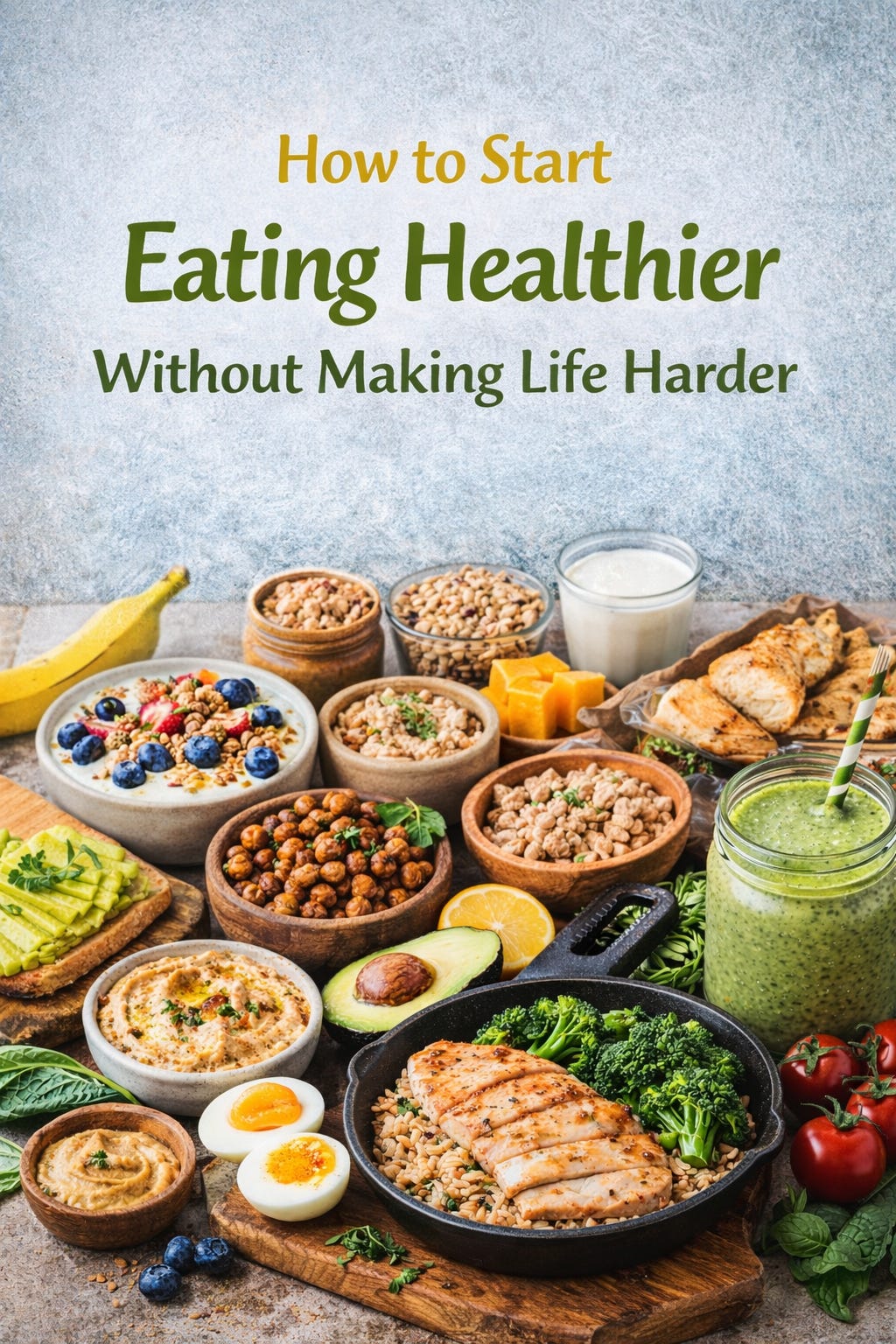
Healthy eating often gets sold like a full lifestyle renovation.
Suddenly it sounds like you need a color-coded fridge, a Sunday meal prep routine, three kinds of seeds, and the energy to roast a tray of vegetables while the rest of your life is already pulling you in six different directions. That version looks great online. It is not how most people actually eat.
Most people are just trying to make it through the week with enough groceries, enough energy, and at least one decent answer to the question of what to eat for dinner.
That is why eating healthier usually goes better when it starts small. Not dramatic. Not strict. Just small enough to fit into a regular day. You do not need a giant reset. You do not need to swear off bread. You do not need to suddenly become a person who loves meal prep.
You just need a few habits that make your regular meals work better.
Healthy Eating Should Help, Not Complicate Everything
A lot of people struggle with healthy eating because they start with a version that is too hard to keep up. They try to change every meal at once. They buy groceries that look healthy but do not match what they actually like eating. They follow food rules that sound disciplined for about four days, then fall apart the second life gets busy.
That is not usually a motivation problem. It is usually a strategy problem.
A better place to start is with simpler questions:
What meals actually keep me full?
What foods do I like enough to keep buying?
What can I add to this meal to make it more satisfying?
What feels realistic for my life right now?
Those questions usually lead somewhere useful. Perfection usually does not.
Start With the Food You Already Eat
One of the easiest mistakes to make is assuming healthy eating means replacing your whole routine overnight. It usually works better when you start with meals you already know you will eat.
If breakfast is usually toast, keep the toast and add eggs or yogurt. If lunch is a sandwich, make it more filling with better protein, fruit, or crunchy vegetables on the side. If you already love pasta, great. Pasta is not the issue. It may just need spinach, chicken, beans, or another piece that helps it hold you over.
That is where this starts to feel doable. You are not building a brand-new identity around food. You are just improving what is already there.
A few examples:
oatmeal with peanut butter and fruit feels much more complete than oatmeal on its own
a salad with chickpeas, chicken, or eggs is far more satisfying than greens by themselves
a rice bowl gets better fast once you add protein, vegetables, and something flavorful like avocado or sauce
pasta becomes a steadier dinner when you add tuna, beans, or grilled chicken
That is real progress, even if it does not look dramatic.
Try to Think About Balance, Not Restriction
A lot of nutrition advice starts with what you should remove. Less sugar. Less bread. Less pasta. Less snacking. Less joy, apparently.
That approach can make food feel tense very quickly.
For most people, it is more helpful to think about what makes a meal feel balanced. Usually that means a mix of protein, a source of energy like carbs, something with fiber, and enough flavor that the meal does not feel like punishment.
A balanced meal might look like:
eggs on toast with fruit
yogurt with berries, oats, and nuts
chicken, rice, and broccoli with olive oil
tacos with beans, avocado, and salsa
pasta with spinach and grilled chicken
You do not need to build every plate perfectly. You are just trying to make meals less flimsy.
Pay Attention to What Actually Keeps You Full
Sometimes “healthy eating” feels frustrating because the meals look healthy but do not really satisfy you. Then you are hungry again an hour later, wondering why you keep circling back to snacks.
This is where protein and fiber quietly make a big difference.
Meals usually hold up better when they include foods like:
eggs
Greek yogurt
cottage cheese
chicken
tuna
beans
lentils
tofu
fruit
vegetables
oats
potatoes
whole grains
You do not need to turn every meal into a math problem. It is often enough to notice when a meal is missing substance. A plate can be technically healthy and still not be enough food.
Stop Expecting Every Meal to Be Impressive
This part matters more than people think.
A lot of healthy eating falls apart because people expect every meal to look fresh, balanced, beautiful, and slightly aspirational. That is not how consistency usually works. Consistency usually looks much less glamorous than that.
Sometimes a good breakfast is eggs on toast and an apple. Sometimes lunch is a turkey sandwich with carrots. Sometimes dinner is rotisserie chicken, microwave rice, and frozen broccoli because that is what you have the energy for.
That still counts.
Simple meals count. Repeated meals count. Easy meals count. Meals that are only mildly exciting still count.
You do not get extra credit for making food harder than it needs to be.
Keep Foods Around That Make Better Choices Easier
A lot of healthy eating comes down to what is easy to grab when you are hungry and not thinking clearly.
It helps to keep practical staples around:
eggs
Greek yogurt
cottage cheese
canned beans
tuna
chicken
oats
rice
potatoes
bread
fruit
frozen vegetables
spinach
hummus
nut butter
cheese
olive oil
This is not about building the world’s most impressive grocery cart. It is about having enough useful food around that putting together a decent meal does not feel like a project.
Make Breakfast Pull Its Weight
Breakfast does not need to be perfect, but it helps when it gives you a little support instead of disappearing the second the morning gets busy.
A few breakfasts that tend to work well:
Greek yogurt with berries and oats
eggs with toast and fruit
oatmeal with peanut butter and banana
cottage cheese with fruit and nuts
a smoothie with yogurt, berries, and spinach
Nothing fancy. Just food that actually stays with you.
Build a Lunch That Is More Than a Placeholder
Lunch gets underestimated all the time. People eat something light because it seems healthy, then spend the rest of the afternoon hungry, distracted, and grazing.
A better lunch usually has a clear protein source, something with fiber, and enough substance to feel like a real meal.
Easy options:
a turkey sandwich with fruit and cucumbers
a salad with chicken or chickpeas and bread on the side
a rice bowl with beans, avocado, and vegetables
a hummus wrap with chicken or tofu
tuna on toast with tomatoes and fruit
Lunch does not need to be interesting. It needs to do its job.
Let Dinner Be Easier Than You Think It Should Be
Dinner is often where people lose steam. By the end of the day, even good intentions are tired.
That is why it helps to have a few low-drama dinners you can come back to without much thought:
chicken, rice, and broccoli
salmon with potatoes and a vegetable
pasta with spinach and grilled chicken
bean tacos with avocado and salsa
tofu stir-fry with rice
a baked potato with cottage cheese and broccoli
The more you accept simple dinners, the less likely you are to fall into takeout-or-nothing thinking.
Do Not Try to Fix Everything This Week
One of the quickest ways to make healthy eating feel impossible is to turn it into a massive overhaul. A new plan, a new shopping list, a fridge purge, a bunch of rules, and suddenly food feels like homework.
You do not need that.
Pick two or three changes that sound manageable:
add more protein to breakfast
keep fruit and yogurt in the house
make lunch more filling
repeat one easy dinner more often
keep frozen vegetables for busy nights
It may not feel dramatic, but that is often the point. The habits that last are usually the ones that do not demand too much from you all at once.
Leave Room for Food You Enjoy
Healthy eating has a much better chance of lasting when it still feels like your life.
That means there should still be room for bread, pasta, potatoes, takeout, dessert, and comfort food. Eating well is not about removing every enjoyable thing from your plate until dinner feels bleak.
It is about building meals and habits that support you most of the time while still leaving room for normal life.
That is what sustainability usually looks like. Not perfection. Not rigid control. Just a way of eating you do not constantly want to escape from.
Final Thoughts
Starting to eat healthier does not need a big speech and a total pantry makeover.
It can start with a breakfast that fills you up better. A lunch with more substance. A few groceries that make decent meals easier. A simpler idea of what “healthy” even means.
You do not need to become someone who loves meal prep.
You do not need to get every meal right.
You do not need to begin again every Monday.
You just need a way of eating that feels possible on a normal day.