
The condiment guide
The sauces, pastes, and finishing ingredients that make simple food taste extraordinary.

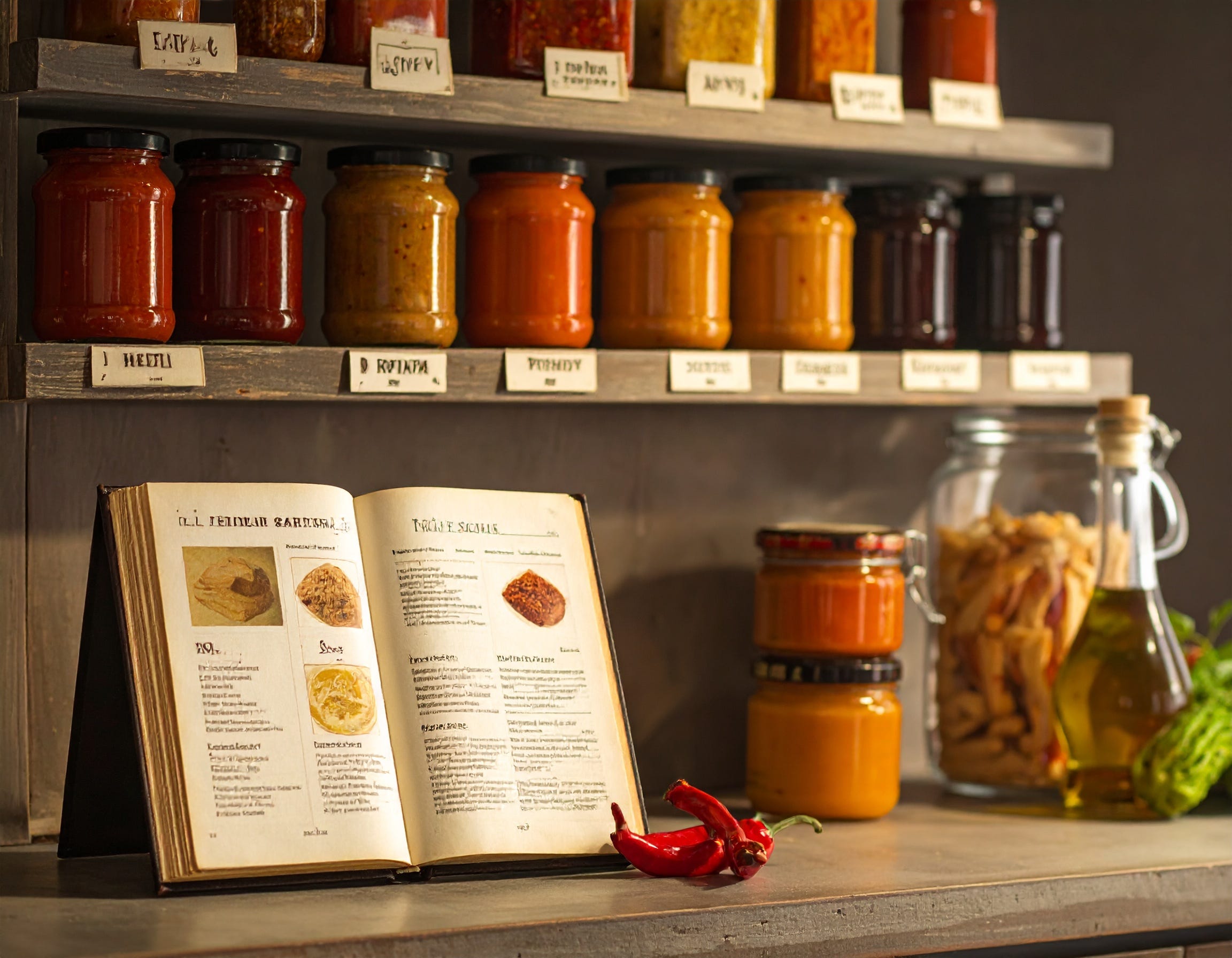
Introduction
There is a category of cooking transformation that happens not in the cooking itself but after it — or alongside it, or at the very beginning of it. A category where the difference between a meal that is merely adequate and one that is genuinely memorable comes down to a single jar, a single bottle, a single spoonful of something that costs very little and takes no time to add but changes everything about the dish it touches.
This is the territory of condiments. And it is the most underinvested category in most home kitchens.
Most people own ketchup, mustard, and maybe a bottle of hot sauce. A few own soy sauce and perhaps a jar of tahini acquired for one recipe and used sparingly since. The full potential of the condiment cupboard — the range of flavor transformations available through the strategic deployment of fermented, cured, pickled, and concentrated ingredients — goes almost entirely unexplored in most home kitchens, not because the ingredients are obscure or expensive but because no one has made the case for them clearly.
This guide makes that case. It covers forty condiments across seven categories — from the everyday essentials most people already own but underuse, through the flavor-building pastes and ferments that are the real secret of restaurant-quality cooking at home, to the finishing ingredients that separate food that tastes fine from food that tastes extraordinary. Each entry covers what it is, what it does, how to store it, and how to use it across multiple meals so that nothing sits at the back of the fridge contributing nothing.
The goal is a condiment cupboard that makes your cooking actively better rather than just slightly more convenient — one that you reach into with intention rather than habit, knowing that what you pull out will genuinely transform what you are about to cook.
How to use this guide
Read it through once for an overview of the full range. Then work through the categories methodically — add the items from the Essential Everyday category first if you do not already have them, then work outward through the flavor builders, ferments, and finishing ingredients over the following weeks and months. Do not try to acquire everything at once. The condiment cupboard is built gradually, and each addition should be made with the intention of actually using the ingredient rather than simply owning it.
Each entry includes a storage note — how long the condiment keeps and where — and three specific uses that go beyond the obvious application most people already know. The obvious application is fine. These are better.
