
The difference between eating well and eating perfectly
One is achievable. One is not. Only one of them is worth pursuing.

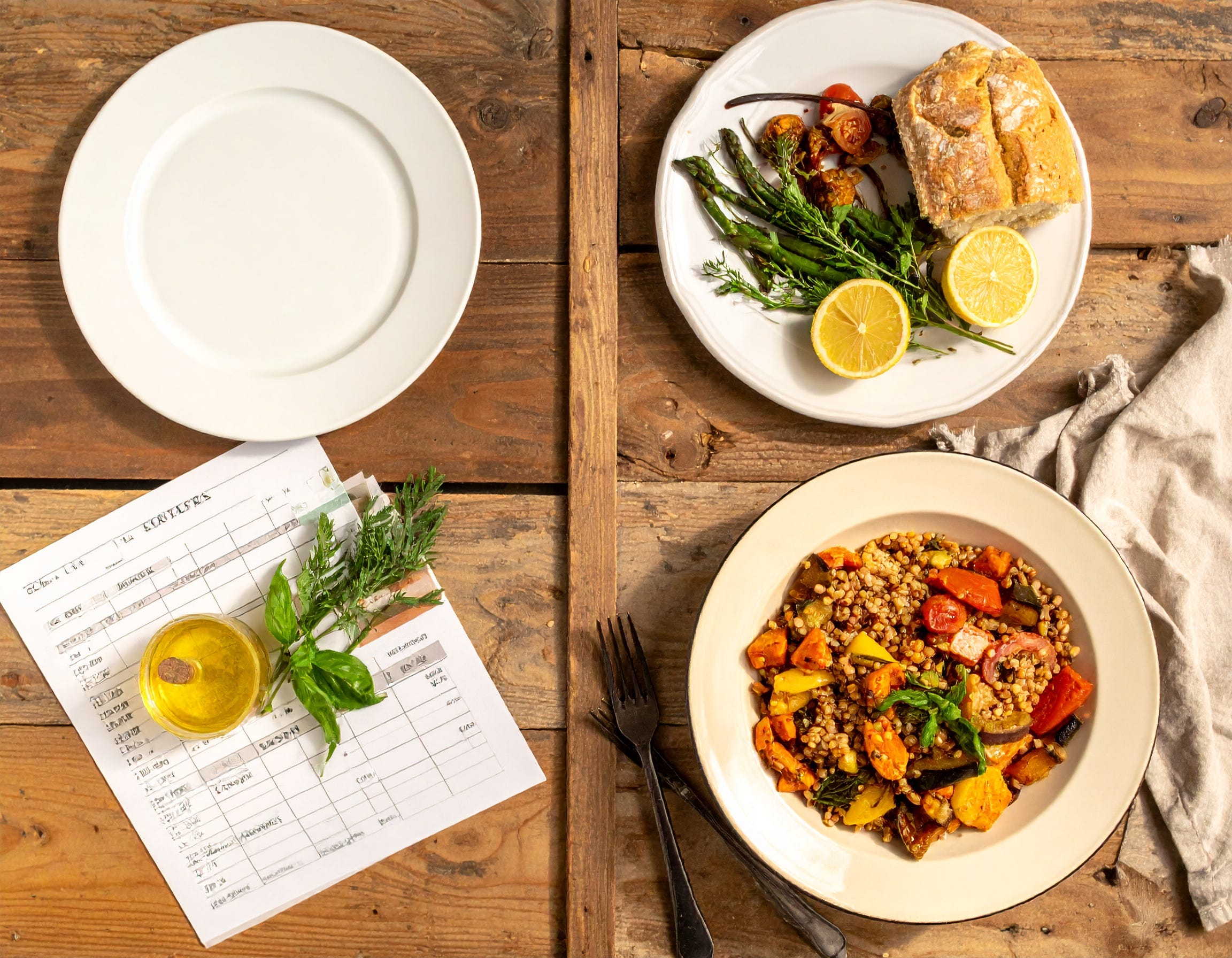
These two things sound similar. They are not.
Eating perfectly is a standard. Eating well is a practice. Eating perfectly has a definition — every meal optimized, every choice correct, every deviation accounted for and corrected. Eating well has a direction — generally toward food that nourishes you, mostly made from whole ingredients, enjoyed without guilt and without obsession.
The standard can be failed. The practice cannot. And that single difference — the presence or absence of failure as a possibility — changes everything about how you eat, how you feel about eating, and whether the effort you put into food actually produces anything lasting.
Most people who struggle with healthy eating are not failing to eat well. They are failing to eat perfectly — a goal they set for themselves, often without realizing it, because the culture around food has spent decades conflating the two. Once you can see the difference clearly, eating well becomes significantly more achievable. Not because it gets easier, but because you stop measuring it against a standard it was never meant to meet.
Where the confusion comes from
The conflation of eating well and eating perfectly did not happen by accident. It was constructed, deliberately and profitably, by an industry that needs you to feel like you are not quite there yet.
Diets work by defining perfection and selling you the path to it. Clean eating works by defining purity and making you feel impure. Wellness content works by identifying what is wrong with your current eating and offering to fix it. All of these approaches require a gap between where you are and where you should be — because if you were already eating well enough, you would not need the product.
The gap is the product. And the gap is maintained by keeping the definition of eating perfectly just slightly out of reach — always one more elimination, one more supplement, one more protocol away from the version of yourself that is finally doing it right.
Eating well, by contrast, has no product to sell. It is not a program or a plan or a protocol. It is a orientation toward food that most people are closer to than they realize — and that gets closer still the moment they stop measuring themselves against perfection.
What eating perfectly looks like
It is worth describing eating perfectly in some detail, because most people are pursuing it without having examined what it actually requires.
Eating perfectly means every meal is nutritionally optimal — the right balance of macronutrients, the right variety of micronutrients, the right portion sizes, prepared in the right way from the right ingredients. It means never eating something processed, never choosing convenience over quality, never letting a social situation or a difficult week or a moment of genuine hunger override the plan.
It means that when you go to a dinner party, you navigate the menu according to your rules rather than eating what the host has cooked with care. It means that when you travel, you maintain your eating standards in airports and hotels and foreign cities where the food culture is entirely different from your own. It means that birthday cake is a problem to be managed rather than a pleasure to be enjoyed. It means that a Friday night takeout after a brutal week is a failure rather than a reasonable human response to exhaustion.
Eating perfectly means that food is always, in every context, a controlled and optimized act. There is no room for spontaneity, for pleasure that is not planned, for the kind of joyful eating that happens when you stop thinking about food long enough to just enjoy it.
Nobody eats perfectly. Not the wellness influencers who appear to. Not the nutritionists who write about it. Not the people whose relationship with food looks, from the outside, like it has been completely figured out. Eating perfectly is not a standard that exists in real human life. It is a construct — useful for selling things, useless for actually living.
What eating well actually looks like
Eating well is quieter and less dramatic than eating perfectly, which is partly why it does not generate as much content.
It looks like a fridge that usually has vegetables in it, not always the right ones, not always enough of them, but something green that can be roasted or thrown into a pan or eaten alongside whatever else is happening for dinner. It looks like a handful of recipes you know well enough to make without thinking — not fifty, not twenty, just enough that you always have somewhere to start.
It looks like choosing the better option most of the time, not all of the time. The salad more often than the fries, but not instead of every plate of fries for the rest of your life. The home-cooked dinner most nights, but not every night, and never with the kind of rigid insistence that makes a takeout feel like a moral event.
It looks like eating food you genuinely enjoy. This is the part that eating perfectly almost always sacrifices — the pleasure, the spontaneity, the willingness to eat something just because it is wonderful rather than because it is correct. Eating well has room for all of this. A meal that is purely delicious and only incidentally nutritious is not a failure. It is part of a full life with food.
It looks like paying attention — not obsessively, not with an app or a spreadsheet, but with the basic awareness of someone who cares about how food makes them feel and uses that information to make reasonable choices. You notice that you feel better when you eat more vegetables. You notice that certain things leave you sluggish. You use this without turning it into a system of rules.
It looks like flexibility — the ability to navigate any situation, any social context, any difficult week, without the whole thing falling apart. To eat well at a dinner party without controlling what you are served. To eat well while traveling without bringing your own food. To eat well during a hard month without expecting yourself to maintain the same standard you hold during easy ones.
Eating well, in other words, looks like a real person living a real life and making food a consistent, enjoyable, and genuinely nourishing part of it — without making food the center of everything, without letting it become a source of anxiety, and without holding themselves to a standard that does not exist.
The practical difference between the two
The difference between eating well and eating perfectly is not just philosophical. It shows up in specific, practical ways that affect how you actually cook and eat day to day.
When you are eating perfectly, a bad meal is a problem. It means something has gone wrong, something needs correcting, the week has been compromised. When you are eating well, a bad meal is just a meal — it happened, it is over, the next one will be better. The absence of the problem is not trivial. It is the difference between a sustainable relationship with food and one that keeps collapsing under the weight of its own standards.
When you are eating perfectly, eating out is complicated. Every menu is a negotiation between what you want and what you are allowed. When you are eating well, eating out is just eating out. You make reasonable choices where you can, you enjoy what you order, and you do not spend the meal calculating whether you are staying within the parameters of the plan.
When you are eating perfectly, a holiday is a minefield. When you are eating well, a holiday is a holiday — an opportunity to eat things you would not eat at home, to experience food as part of a place and a culture, to enjoy yourself without the shadow of a plan you are temporarily betraying.
When you are eating perfectly, food is work. When you are eating well, food is mostly pleasure with some intention behind it. That distinction — work versus pleasure with intention — is where the sustainability lives. Nobody sustains work indefinitely. Most people sustain pleasure, especially when it is also good for them.
How to shift from one to the other
The shift from pursuing perfection to practicing eating well is less about changing what you eat and more about changing how you think about what you eat.
It starts with dropping the binary. Food is not good or bad, healthy or unhealthy, allowed or forbidden. It exists on a spectrum, and most of it — the overwhelming majority of what most people eat most of the time — falls somewhere in the vast middle of that spectrum where the distinctions are much less important than the perfection mindset insists.
It continues with redefining success. Success is not a perfect week. Success is a week in which you cooked more than you did not, ate vegetables more days than you did not, made choices you feel reasonably good about more often than not. That is eating well. It does not look like much on any given day. Over years, it looks like everything.
It ends — if it ends anywhere — with making peace with the fact that you will never eat perfectly, and that this is not a loss. You will eat well, imperfectly and continuously, for the rest of your life. Some weeks better than others. Some meals better than others. Always in a general direction, never on a perfect path.
That is enough. It has always been enough. The gap between enough and perfect is the gap that diet culture lives in — and the moment you stop trying to close it, you are finally free to just eat well.
What this means for how Joyvela works
Everything here is built for eating well, not eating perfectly. The recipes are designed to be good enough on a Wednesday night when you are tired, not impressive enough to serve at a dinner party where everyone is watching. The swaps are offered as better options, not mandatory corrections. The ingredient spotlights are about expanding what is possible, not narrowing what is allowed.
We are not trying to get you to eat perfectly. We are not sure that would be good for you even if it were possible. We are trying to make eating well — the real, imperfect, sustainable, genuinely enjoyable version — as easy and as pleasurable as we can.
That is the whole project. And it does not require perfection from either of us.