
The myth of the clean eater and what it costs us
Clean eating promised health. It delivered something else entirely.

Clean eating arrived with the best of intentions.
At its core, the original idea was reasonable enough — eat whole foods, minimize processing, choose ingredients you can recognize and pronounce. Step away from the packaged, the artificial, the heavily manufactured. Get closer to food in its natural state. This is not bad advice. Stripped of everything that came after it, it is actually fairly sensible guidance that most nutrition researchers would broadly endorse.
But clean eating did not stay stripped of everything that came after it. It grew. It accumulated rules and restrictions and moral weight at a rate that had nothing to do with nutritional science and everything to do with identity, community, and the particular dynamics of how health content spreads on social media. By the time clean eating had fully matured as a cultural phenomenon, it had become something unrecognizable from its reasonable origins — a rigid, morally loaded, identity-based framework that caused genuine harm to the people who followed it most closely, while delivering far less health benefit than it promised.
This is the story of how that happened, and what it cost.
What clean eating became
The trajectory of clean eating follows a pattern that is common to many wellness trends: a reasonable core idea gets amplified, rigidified, and monetized until it bears little resemblance to what it started as.
The reasonable core — eat more whole foods — became, in its amplified form, a comprehensive moral framework for evaluating every food and every food choice. Foods were divided into clean and not clean, and the division was presented as clear and obvious when it was actually arbitrary and contested. Chicken breast was clean. Chicken nuggets were not. Brown rice was clean. White rice was not, or maybe it was, depending on which version of clean eating you were following, because there were many versions and they did not agree with each other but all used the same language and all implied the same moral hierarchy.
The moral hierarchy is the key development, and it is what separated clean eating from simple healthy eating advice. Clean and dirty are not nutritional categories. They are moral ones. Dirt is impurity. Impurity is wrong. To eat dirty is not merely to make a less optimal nutritional choice — it is to be, in some sense, less. Less disciplined, less conscious, less aligned with your values. The language carried a charge that the underlying nutritional advice did not warrant, and that charge did a great deal of damage.
The myth of the clean eater
At the center of clean eating is a figure — the clean eater — who embodies the framework’s aspirations. The clean eater is lean, energetic, disciplined, and glowing. They wake up early and make smoothies. Their kitchen is organized and their pantry is well-stocked with the right things. Their relationship with food is uncomplicated and virtuous. They do not struggle with cravings or restarts or difficult weeks. They have simply figured it out, in a way that is available to you if you are willing to make the same choices they have made.
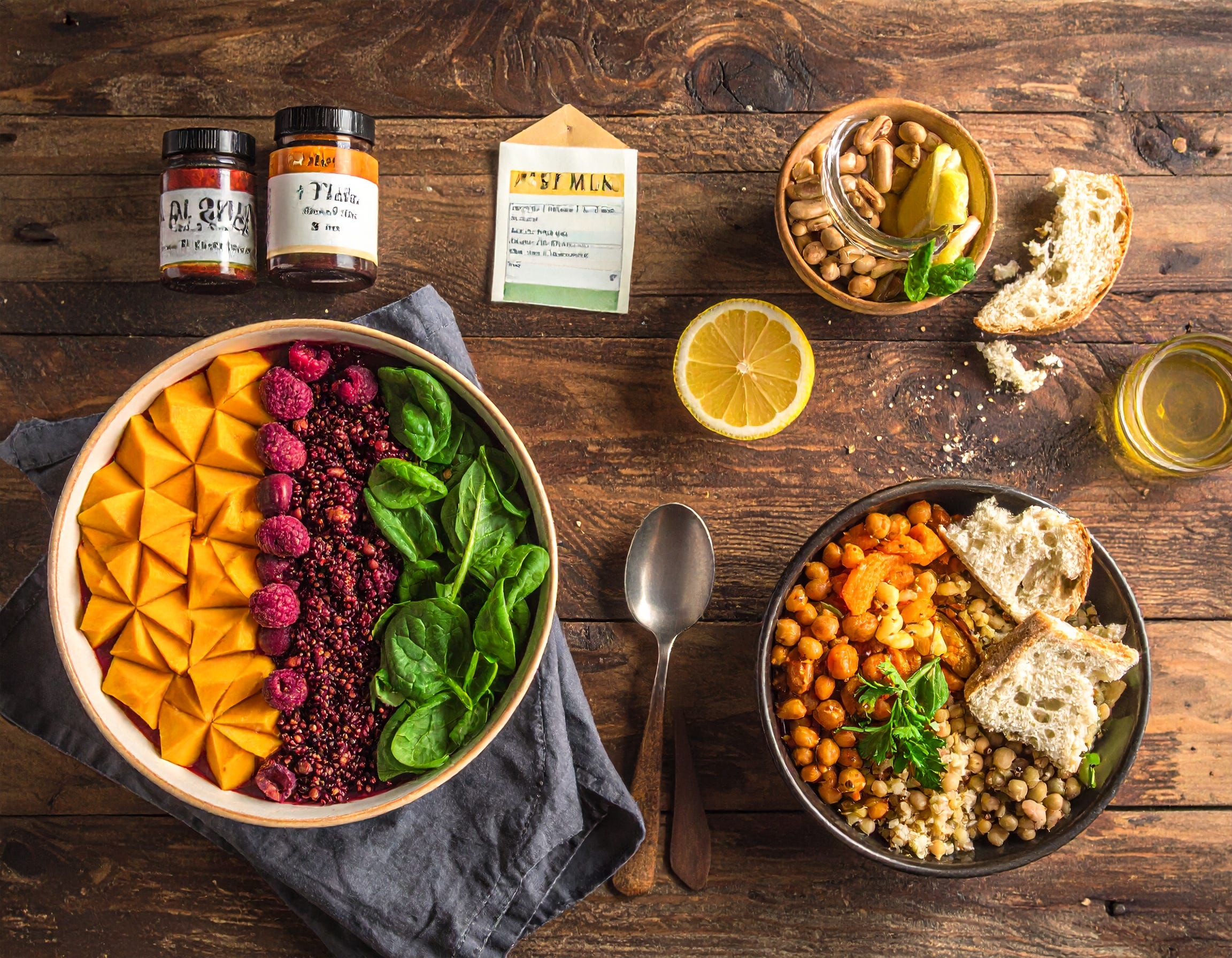
This figure is a myth. Not in the sense that no one eats this way — some people do, for periods of time — but in the sense that the image is a construction that omits everything that does not serve the narrative. The clean eater on Instagram does not show you the anxiety they experience when the plan is disrupted. They do not show you the social situations they avoid because the food will not be clean. They do not show you the relationship with food that has quietly become a source of stress and vigilance rather than pleasure. They show you the smoothie and the flat-lay and the glowing skin, and they let you fill in the rest.
The myth of the clean eater serves several functions. It sells products — supplements, programs, cookbooks, meal plans, all of which promise to help you achieve the clean eater’s effortless virtue. It creates aspiration and inadequacy simultaneously, which is the engine of all effective marketing. And it provides a community and an identity for people who adopt it, which is genuinely valuable even as the framework that organizes the community is harmful.
What the myth does not do is accurately represent what eating well actually looks like for real people in real lives. Real people have complicated relationships with food, difficult weeks, moments of eating that do not match their intentions, social situations that require flexibility. Real healthy eating accommodates all of this. Clean eating, in its fully developed form, cannot.
What it cost
The costs of the clean eating framework are not hypothetical. They showed up in the lives of the people who followed it most closely, and they were significant.
The cost to physical health. Clean eating, pursued rigorously, often leads to the elimination of entire food groups that are genuinely nutritious — dairy, legumes, grains, certain fruits — based on claims about their cleanliness that are not supported by mainstream nutritional science. The result, for committed clean eaters, was sometimes a diet that was less nutritionally complete than what they had been eating before, dressed up in the language of health. More vegetables, yes, but also unnecessary restrictions, unnecessary supplements to compensate for unnecessarily eliminated food groups, and an overall dietary pattern that was more complicated and more expensive than it needed to be.
The cost to mental health. The research on orthorexia — a condition characterized by an obsessive focus on eating only foods one considers healthy, to the point that it disrupts daily life and wellbeing — found that clean eating communities were a significant risk environment for its development. The rigid rules, the moral framework, the social reinforcement of restriction as virtue, the identity built around dietary purity — these are precisely the conditions under which orthorexic thinking develops. For a meaningful proportion of the people who engaged most deeply with clean eating culture, the framework that promised better health produced a disordered relationship with food instead.
The cost to social life. Clean eating, taken seriously, is socially isolating. When your food rules are rigid enough, sharing meals with people who do not follow the same rules becomes difficult or impossible. The dinner party menu becomes a problem to navigate. The restaurant becomes a minefield. The family meal becomes a negotiation. Eating together — one of the most fundamental human social activities — becomes complicated in ways that damage relationships and diminish quality of life.
The cost to joy. This is the cost that clean eating culture is least willing to acknowledge, because joy is not part of the framework’s value system. Clean eating prizes discipline, purity, and control. It has no category for the pleasure of eating something that is not on the approved list, the joy of an unplanned meal, the satisfaction of eating exactly what you wanted without calculating its cleanliness. These experiences are not clean. They are, however, part of a full and genuinely healthy relationship with food — and clean eating’s inability to accommodate them is one of the most significant ways it falls short of the health it claims to deliver.
The language that persists
Clean eating as a named movement has faded somewhat from its cultural peak. But the language and the underlying logic have not gone away. They have dispersed into the broader wellness culture, showing up in new frameworks with different names but the same core structure: foods divided into acceptable and unacceptable, the acceptability presented as scientific when it is actually moral, the framework promising health while delivering restriction and anxiety.
The language of clean persists in the way people describe food — clean ingredients, clean label, eating clean this week. The moral hierarchy persists in the way certain foods are discussed — as guilty pleasures, as indulgences, as things you are allowed to have occasionally as long as you have earned them. The identity framework persists in the way people present their eating to others — as a statement of values, a signal of consciousness, a communication about the kind of person they are.
Recognizing this language for what it is — a moral framework dressed in nutritional clothing — is the first step toward disengaging from it. The foods on your plate are not clean or dirty. They are more or less nutritious, more or less processed, more or less suitable for regular consumption. These are useful distinctions to make. They do not require a moral vocabulary to make them.
What actually works
The irony of clean eating is that the core impulse behind it — eating more whole foods, cooking more, choosing less processed options where possible — is genuinely good guidance. The problem was never the direction. It was the rigidity, the morality, the identity framework, and the promise of purity that was always impossible to deliver.
What actually works, in the long run, is less dramatic and less photogenic than clean eating, which is probably why it does not generate as much content. It looks like eating a wide variety of whole foods most of the time. It looks like cooking regularly without making cooking a performance. It looks like choosing less processed options where the choice is easy and not agonizing over it when it is not. It looks like flexibility — the ability to eat differently in different contexts without experiencing it as a failure.
It looks, in other words, like eating well rather than eating purely. And eating well, sustained over years, is everything that clean eating promised and could never quite deliver.
What Joyvela does instead
We do not use the word clean. We do not divide foods into acceptable and unacceptable categories. We do not frame eating as a pursuit of purity or present the people who cook our recipes as a particular kind of virtuous person.
What we do is focus on food that is genuinely nourishing and genuinely delicious — whole ingredients, real flavors, meals that make you feel good in the most straightforward sense. No moral framework required. No identity to maintain. No purity to protect.
Just good food, made well, eaten with pleasure.
That is what clean eating was trying to be before it got lost. We are trying to find our way back to it.