
The pressure to eat perfectly in public and what it does to us
Nobody is watching what you eat as closely as you think. But acting as if they are has real costs.

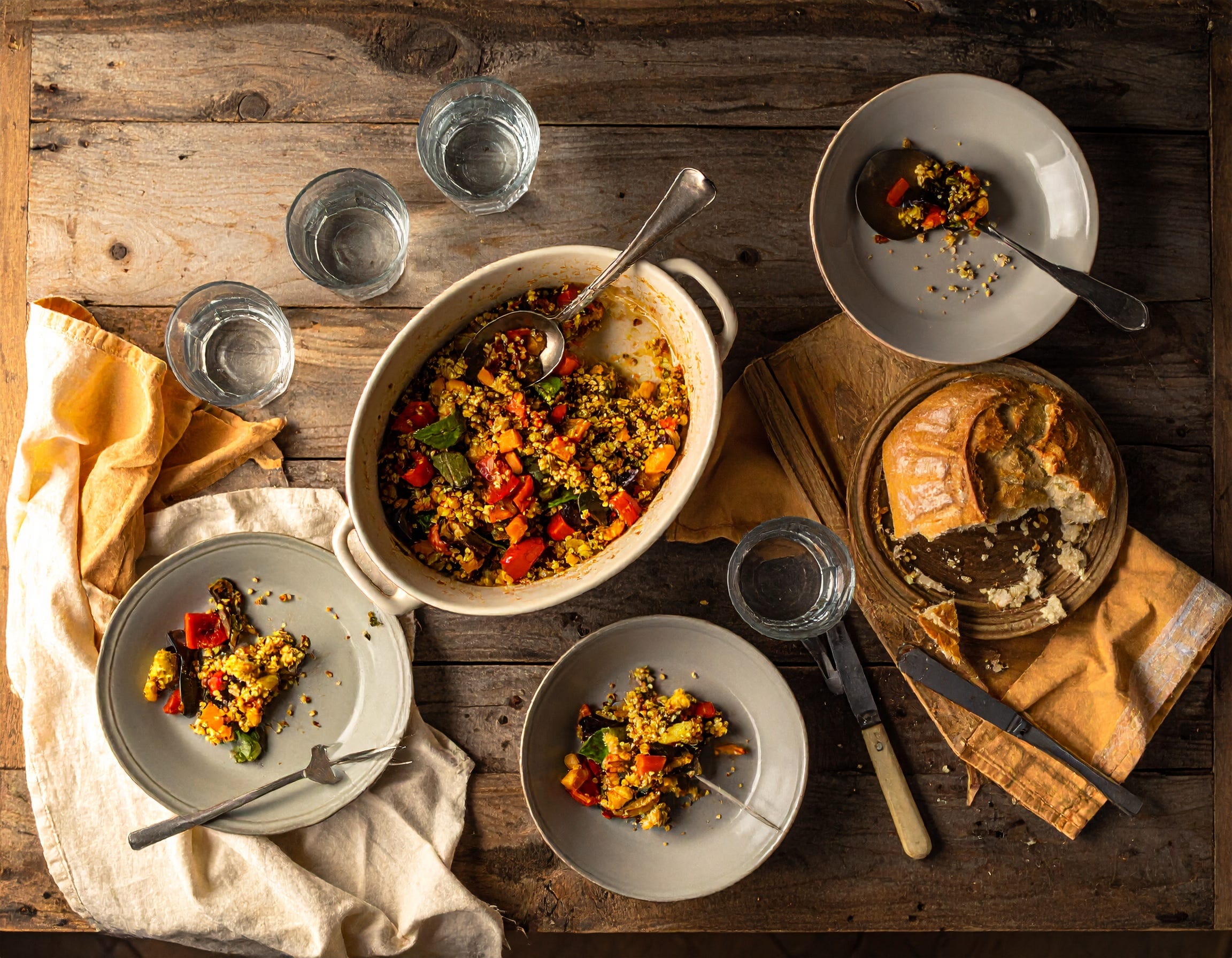
There is a particular kind of self-consciousness that arrives with food in public.
It might show up at a work lunch, when you are deciding between the salad and the sandwich and suddenly aware that your choice communicates something about you to the people at the table. It might show up at a dinner party, when the host has made something rich and wonderful and you are calculating, silently, whether eating it fully will be noted or judged. It might show up at a restaurant with someone you are trying to impress, when the thing you actually want to order feels like the wrong thing to order in front of this person. It might show up at a family gathering, where your dietary choices are subject to commentary from people who have known you long enough to have opinions about how you should eat.
In all of these situations, there is a version of eating that is about hunger, taste, and pleasure — the actual point of eating — and a version that is about performance, impression management, and the anxiety of being seen making a choice that might be evaluated. And for a significant number of people, in a significant number of social eating situations, the second version wins.
This is the pressure to eat perfectly in public. It is widespread, largely unexamined, and it does real damage to the relationship with food that makes eating well sustainable over time.
Where the pressure comes from
The pressure to eat perfectly in public has several sources, and they layer on top of each other in ways that make the total pressure greater than any individual source would produce on its own.
The first source is the general cultural message, absorbed over years of exposure to diet culture and wellness content, that food choices are moral choices. If what you eat reflects your values and your discipline and your relationship with your own health, then eating something indulgent in public is not just a dietary choice — it is a public display of a character flaw. The person who orders the burger when everyone else has ordered the salad has revealed something about themselves. Or at least, this is how it can feel from the inside, regardless of whether anyone else at the table is actually paying attention to the order.
The second source is the specific social dynamic of eating together — the way shared meals invite shared observation. When you eat alone, your choices are private. When you eat with other people, your choices are at least potentially visible. This visibility is not inherently problematic — eating together is a social act, and some level of mutual awareness is part of what makes it social. But when that visibility is filtered through the lens of the first source — the belief that food choices are moral choices — it becomes a source of performance anxiety rather than simple social presence.
The third source is specific to certain social contexts: the workplace, the first date, the family gathering, the meal with someone whose opinion of you matters in some specific way. These contexts add a layer of evaluation to the ambient visibility of shared eating. You are not just being seen eating. You are being evaluated by someone whose evaluation carries weight. The stakes are higher, which makes the performance anxiety more acute.
The fourth source, increasingly, is the social media layer. When meals are potentially documented and shared — when the phone at the table means that what you eat might become content — eating in public acquires an additional audience beyond the people physically present. The potential for documentation changes the experience of eating even when no documentation actually occurs, because the possibility is always present.
What the pressure produces
The pressure to eat perfectly in public produces several specific behaviors that are worth examining, because they are common enough to be nearly universal and damaging enough to be worth changing.
Ordering what you think you should rather than what you want. This is the most direct and most common response to public eating pressure — the salad ordered not because you want a salad but because ordering a salad communicates the right things about you. The pleasure of the meal is sacrificed to the performance of virtue. You eat something you did not particularly want, in a social situation where eating together should be a source of pleasure and connection, and the meal is diminished on both dimensions — less enjoyable for you, less connecting because you are managing a performance rather than simply being present.
Eating less than you actually want. Related to the above but distinct: the experience of being watched eating can produce a kind of self-consciousness that reduces how much you eat, not because you are not hungry but because eating freely and fully in public feels somehow excessive or revealing. You eat half the meal and call it enough, not out of genuine satisfaction but out of a desire to not be seen wanting more. Later, privately, you eat more — to compensate for the performance of restraint that the social situation required.
The compensation cycle. For some people, the pressure to eat perfectly in public and the compromise of eating privately produces a cycle that is damaging in a specific way. The public performance of virtue — the salad, the small portion, the dessert declined — is followed by private compensation — eating more of what was denied, sometimes in a way that feels compulsive rather than pleasurable. The restriction in one context produces excess in another. The performance is maintained, but at a cost to the private relationship with food that the performance was supposed to reflect.
Avoiding situations where eating is unavoidable. For people for whom the pressure is most acute, the response is avoidance — declining social situations that involve eating, finding reasons not to attend events where food is present, engineering circumstances that allow them to eat privately rather than publicly. This avoidance is protective in the short term and isolating in the long term. Food is woven into social life in a way that makes avoiding it systematically a significant limitation on social participation.
The running internal commentary. Even for people who eat what they want in public without behavioral modification, the pressure often shows up as an internal commentary that runs alongside the meal — a self-conscious narration of what you are eating and how it might be perceived, a low-grade anxiety that does not change the behavior but occupies mental space that could be used for actually enjoying the meal and the company.
The spotlight effect and why it matters here
There is a well-documented psychological phenomenon called the spotlight effect — the tendency to overestimate how much other people notice and remember about our appearance and behavior. We feel, consistently and across a wide range of contexts, that we are more observed and more evaluated than we actually are. Other people are, in fact, mostly thinking about themselves.
The spotlight effect applies directly to public eating. The person who agonizes over their order, who eats the salad they did not want to perform virtue, who declines dessert while silently wishing they had not — that person is almost certainly experiencing the meal as more evaluated than it actually is. The people at the table are thinking about their own orders, their own conversations, their own days. They are not closely monitoring what you are eating and forming lasting judgments about your character based on it.
This does not make the feeling of being evaluated less real. The spotlight effect is a cognitive bias, which means it operates regardless of knowing about it — knowing that other people are not watching as closely as you feel does not reliably produce the felt experience of not being watched. But it does provide a useful reality check that is worth applying, repeatedly, in situations where the pressure to perform is high.
Nobody is watching you eat as closely as you think. The choices you make at lunch are not forming lasting impressions in your colleagues’ minds. The dessert you order or decline at dinner is not being noted and evaluated by the people you are with. The meal is just a meal, and most of the audience you are performing for exists primarily in your own head.
What eating freely in public actually feels like
There is a version of eating in public that most people have experienced at some point — usually in contexts of high comfort and low self-consciousness, with people you trust completely or in places where the performance anxiety simply does not activate.
You order what you actually want. You eat as much as you actually want. You are present to the conversation and the company rather than managing a performance of dietary virtue. You notice the food — its taste, its texture, whether it is as good as you hoped — rather than what it communicates about you. The meal is pleasurable in the uncomplicated way that meals can be when they are not also performances.
This is eating freely in public. It is not reckless or indulgent or evidence of not caring about your health. It is simply eating — the way humans ate for most of human history, before the particular combination of diet culture, social media, and modern self-consciousness made it so complicated.
Getting to this more frequently is possible. It does not require eliminating the self-consciousness entirely, which is probably not achievable for most people in all contexts. It requires noticing the performance anxiety when it arrives, applying the reality check that the audience is smaller and less attentive than it feels, making the choice that is genuinely yours rather than the choice that manages impressions most effectively, and eating the meal that is actually in front of you rather than the performance of a meal.
Over time, this practice — because it is a practice, like everything else in the Joyvela archive — produces a quieter relationship with public eating. The anxiety does not disappear, but it becomes less influential. The performance becomes less automatic. The meal becomes more genuinely yours.
A note on specific contexts
Some contexts make public eating pressure more acute than others, and it is worth naming them directly.
The workplace is one of the most loaded eating environments for many people — a context where food choices are visible to colleagues and managers, where dietary habits can feel like professional self-presentation, where eating at your desk or not eating lunch at all has become so normalized that eating a real meal feels like a statement. The workplace food environment deserves its own article, and it will get one. For now: eating a proper meal at work is not an indulgence or a signal of insufficient dedication. It is basic self-care, and it is compatible with being good at your job.
The first date or early relationship is another high-pressure eating context — one where the desire to make a good impression makes the performance anxiety particularly acute. The research on this, incidentally, suggests that people who eat freely and with obvious enjoyment on dates are generally more attractive to potential partners than people who perform dietary restraint. Genuine pleasure is more appealing than performed virtue. Order what you want.
The family gathering is often the most complicated, because family members tend to have the longest memories and the strongest opinions about who you are and how you should eat, and because the emotional stakes of family relationships make their judgments feel weightier than strangers’. This is a context where the pressure often comes not just from internal performance anxiety but from actual external commentary — the relative who notes what you are eating, the comparison to how you used to eat, the concern or criticism dressed as interest. Navigating this requires more than a reality check. It requires a settled enough sense of your own relationship with food that other people’s opinions about your plate do not destabilize it.
What Joyvela believes about eating in public
A meal shared with other people is one of the greatest pleasures available to a human being. The food, the conversation, the particular quality of attention that people bring to each other around a table — these are things worth protecting from the anxiety and self-consciousness that public eating pressure produces.
Eating well in public does not mean eating virtuously in public. It means eating with genuine pleasure, genuine presence, and the freedom that comes from knowing that what is on your plate is yours to choose — not a statement about your values, not a performance for an audience, not a communication about the kind of person you are trying to be.
Just food. Chosen freely. Eaten with pleasure.
That is the standard. And it is available at every table you sit down to, if you can quiet the performance long enough to actually eat the meal.