
The problem with diet culture disguised as wellness content
It got a rebrand. It didn’t get better.

Something interesting happened to diet culture over the last decade. It got embarrassed.
Not embarrassed enough to go away. Not embarrassed enough to actually change. But embarrassed enough to realize that the old language wasn’t working anymore — that telling people to eat less and weigh themselves daily and feel guilty about birthday cake was starting to generate backlash rather than revenue. The before-and-after photos, the calorie-counting apps, the meal replacement shakes, the celebrity diet books — people were beginning to see through them. The body positivity movement was gaining momentum. The concept of diet culture itself was being named and criticized in mainstream spaces for the first time.
So diet culture did what any savvy industry does when its product falls out of fashion. It rebranded.
Out went the language of restriction and weight loss. In came the language of wellness, nourishment, and self-care. Out went calorie counts displayed prominently on packaging. In came clean, natural, and free from. Out went diet pills and meal replacements. In came supplements, adaptogens, and functional foods. Out went the message that you needed to be thinner. In came the message that you needed to be optimized — more energized, more focused, more vibrant, more you.
The packaging changed completely. The product underneath barely changed at all.
How to recognize diet culture in a wellness outfit
The challenge with diet culture in its new form is that it is genuinely harder to spot. The old version was relatively transparent in its intentions. The new version has learned to speak the language of empowerment and self-love while selling the same fear and inadequacy it always sold, just wrapped in better graphic design and a more expensive price point.
Here are the signals that something marketed as wellness is actually diet culture in disguise.
It starts with what you are lacking. Legitimate health content helps you understand how to nourish yourself. Diet culture disguised as wellness starts by establishing that something is wrong with you — your gut is inflamed, your hormones are disrupted, your toxins need cleansing, your metabolism is broken. The specific problem changes with the trend cycle, but the structure is always the same: you are deficient in some way, and the content you are consuming is about to tell you how to fix it. The problem is always you. The solution always costs something.
It uses scientific language without scientific substance. Words like toxins, cleanse, alkaline, inflammation, and gut health have real meanings in actual science. In wellness content, they are used loosely and strategically — specific enough to sound credible, vague enough to be impossible to disprove. If a piece of content tells you that a particular food or supplement will reduce inflammation, detox your liver, or reset your metabolism, ask what that actually means and what evidence supports it. More often than not, the answer is either deeply oversimplified or completely fabricated.
It sells elimination. One of the most reliable markers of diet culture — in any form — is the elevation of removal over addition. Genuine nutrition advice is largely about variety, abundance, and adding more of the good stuff. Diet culture, even in wellness clothing, keeps returning to what you should cut out — gluten, dairy, sugar, lectins, seed oils, nightshades, whatever the current villain happens to be. The list of things you are supposed to eliminate expands over time rather than contracts. If you followed every piece of wellness content that told you to eliminate something, you would eventually have nothing left to eat.
It makes you feel guilty for enjoying food. This is the most consistent thread running through diet culture regardless of which era or aesthetic it is presenting in. Wellness content that is actually diet culture will always, eventually, make you feel bad for eating something you enjoyed. Maybe it is framed as information — “here is what that food is actually doing to your gut” — or as gentle concern — “I just want you to feel your best” — but the effect is the same. You ate something good and now you feel bad about it. That is diet culture. It does not matter what words were used to get there.
It targets your identity, not just your choices. Old diet culture sold you a body. New diet culture sells you a self. The promise is not just that you will look better if you follow the program — it is that you will be better. More disciplined. More conscious. More evolved in your relationship with food than the people around you who are still eating whatever they want. This identity dimension is what makes wellness diet culture particularly sticky and particularly insidious. It is not just about what you eat anymore. It is about who you are.
The specific formats to watch out for
Diet culture in wellness clothing shows up in predictable formats. Knowing them makes them easier to see for what they are.
The what I eat in a day video. This format presents one person’s daily eating as aspirational content, implicitly suggesting that you should eat similarly if you want to look and feel the way they do. The problem is not that these videos exist. The problem is what they quietly communicate — that there is a correct way to eat, that this person has found it, and that watching them eat it is somehow useful to you. It normalizes whatever that person is eating as the standard, whether it is genuinely healthy or deeply restrictive or somewhere in between, and it does so without ever making a claim that can be challenged.
The gut health content pipeline. Gut health is a legitimate and genuinely interesting area of nutritional science. It is also one of the most thoroughly colonized territories in wellness content, because it provides an endless supply of things that might be harming your gut — which means an endless supply of content about what to eliminate, what to supplement, and what program to buy. Real gut health research is nuanced, contested, and mostly points toward eating a wide variety of plant foods. Wellness gut health content is usually a funnel toward a probiotic supplement or an elimination protocol.
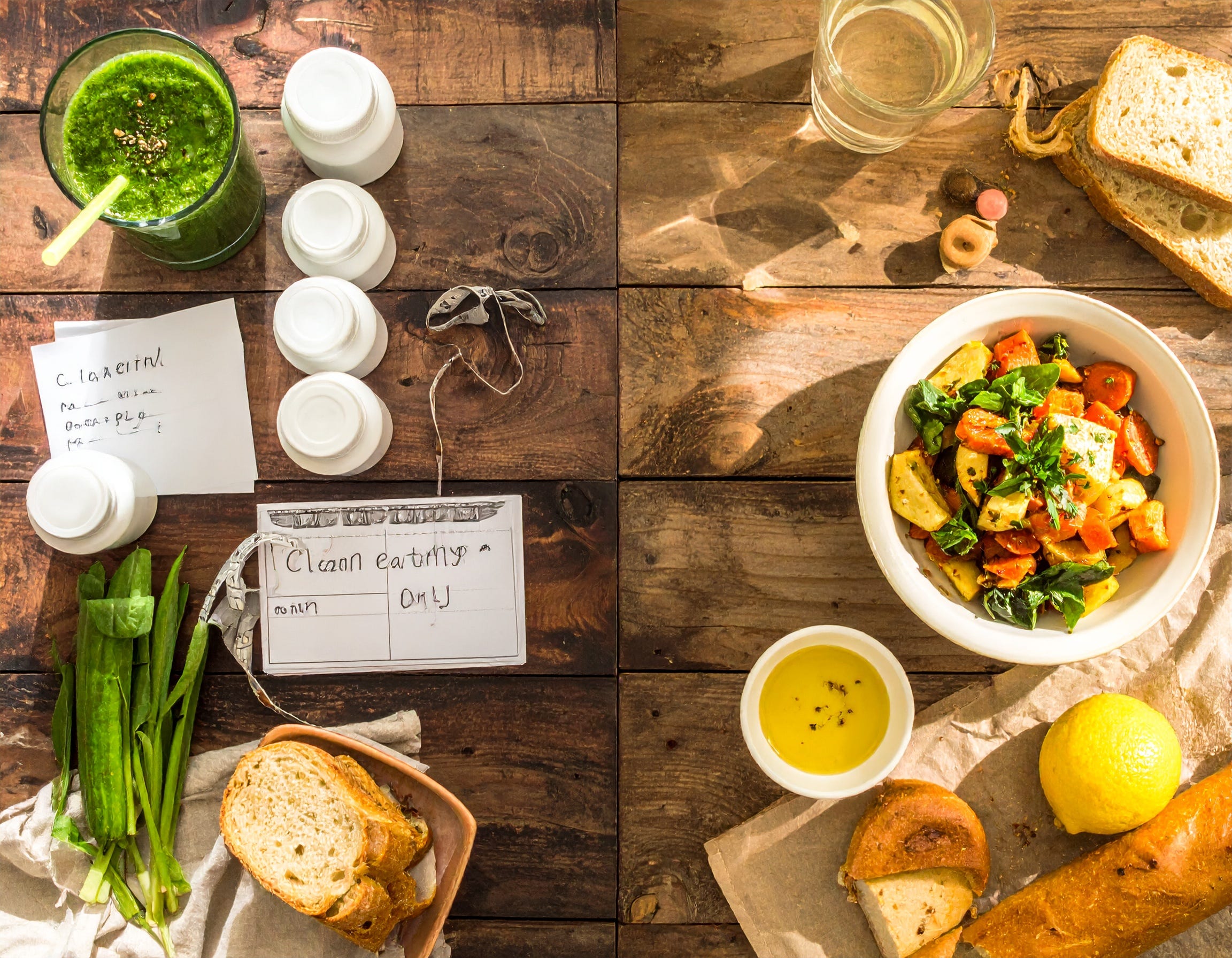
The clean eating aesthetic. Clean eating started as a reasonable idea — eat whole foods, minimize processing — and became something much more rigid and morally loaded. The language of clean implies its opposite, which means that food that is not clean is dirty. Dirty means impure. Impure means wrong. The aesthetic that grew around clean eating — white bowls, green smoothies, glass meal prep containers, flat lays of supplements and herbal teas — became a visual shorthand for a particular kind of virtuous relationship with food that is as much about identity and status as it is about health. Following clean eating content does not just tell you what to eat. It tells you what kind of person you should aspire to be.
The wellness influencer redemption arc. This format follows a reliable structure: I used to eat terribly and feel awful, then I discovered this way of eating, and now everything is different. My skin cleared up. My energy came back. My relationship with food completely transformed. These stories are compelling because they are personal and because they tap into the universal desire to feel better. They are also almost impossible to evaluate critically because they are individual anecdotes presented as universal solutions. What worked for one person — or what they believe worked, given the complexity of human health — is not necessarily transferable, and the content rarely acknowledges this.
Why this matters for how you eat
None of this is purely academic. Diet culture disguised as wellness content has real effects on real people’s relationships with food, and most of those effects are negative.
It creates anxiety where there should be none. People who were perfectly healthy eaters before they started consuming wellness content often find themselves anxious about foods they never thought twice about, convinced that something they cannot see or feel is quietly harming them. This anxiety is not a side effect of the content — it is the product. Anxious people keep consuming content. Anxious people buy supplements. Anxious people sign up for programs.
It makes eating socially complicated in ways that damage relationships and quality of life. When your eating is governed by a long list of eliminations and protocols, sharing meals with other people becomes a negotiation rather than a pleasure. You become the person at the dinner party with the complicated order, the person who cannot eat what the host has cooked, the person whose relationship with food has become so rule-bound that spontaneity is no longer possible. This is presented as discipline. It is actually isolation.
It crowds out genuine nutrition knowledge with noise. The more wellness content you consume, the harder it becomes to hold onto the simple, evidence-based principles that actually underpin good health — eat a wide variety of whole foods, mostly plants, not too much of any one thing, enjoy what you eat, move your body, sleep enough. These principles are not exciting enough to generate content at scale. They do not sell supplements or programs. They are also, reliably, what the evidence supports.
What to do instead
The antidote to diet culture in wellness clothing is not cynicism about all health content. There is genuinely useful, honest, evidence-based information about food and health out there, and it is worth seeking out.
The antidote is a set of questions you ask before you internalize what you are reading or watching. Does this content make me feel worse about my current eating, or does it help me understand something useful? Is it trying to sell me something — a product, a program, an identity? Does it use scientific language precisely or loosely? Does it add to my understanding or add to my anxiety? Does it make food feel more pleasurable and approachable, or less?
Good health content should leave you feeling more confident and more capable, not more afraid. It should make the world of food feel larger and more interesting, not smaller and more restricted. It should point you toward abundance — more vegetables, more variety, more pleasure, more ease — rather than toward elimination.
And it should never, under any circumstances, make you feel guilty for enjoying what you ate.
Where Joyvela stands on this
We are going to be straightforward about it: Joyvela is not a wellness brand. We do not sell supplements, programs, or protocols. We do not use the language of clean eating or detoxing or optimizing. We do not tell you that a particular food is harming you or that your gut is in trouble or that you need to eliminate anything.
What we do is publish recipes that are built from whole, nourishing ingredients and that taste genuinely good. We share practical knowledge about ingredients and cooking that makes eating well easier and more enjoyable. We offer swaps that are better options, not mandatory upgrades. We write about food as something to be savored, not managed.
If that sounds less exciting than a ten-day gut reset or a clean eating transformation, that is because it is. It is also more honest, more sustainable, and more likely to actually improve the way you eat and feel over the long term.
Diet culture got a rebrand. We are not part of it.