
The real reason people say they don’t have time to cook — and what to do about it
Time is rarely the actual problem. Here is what is.

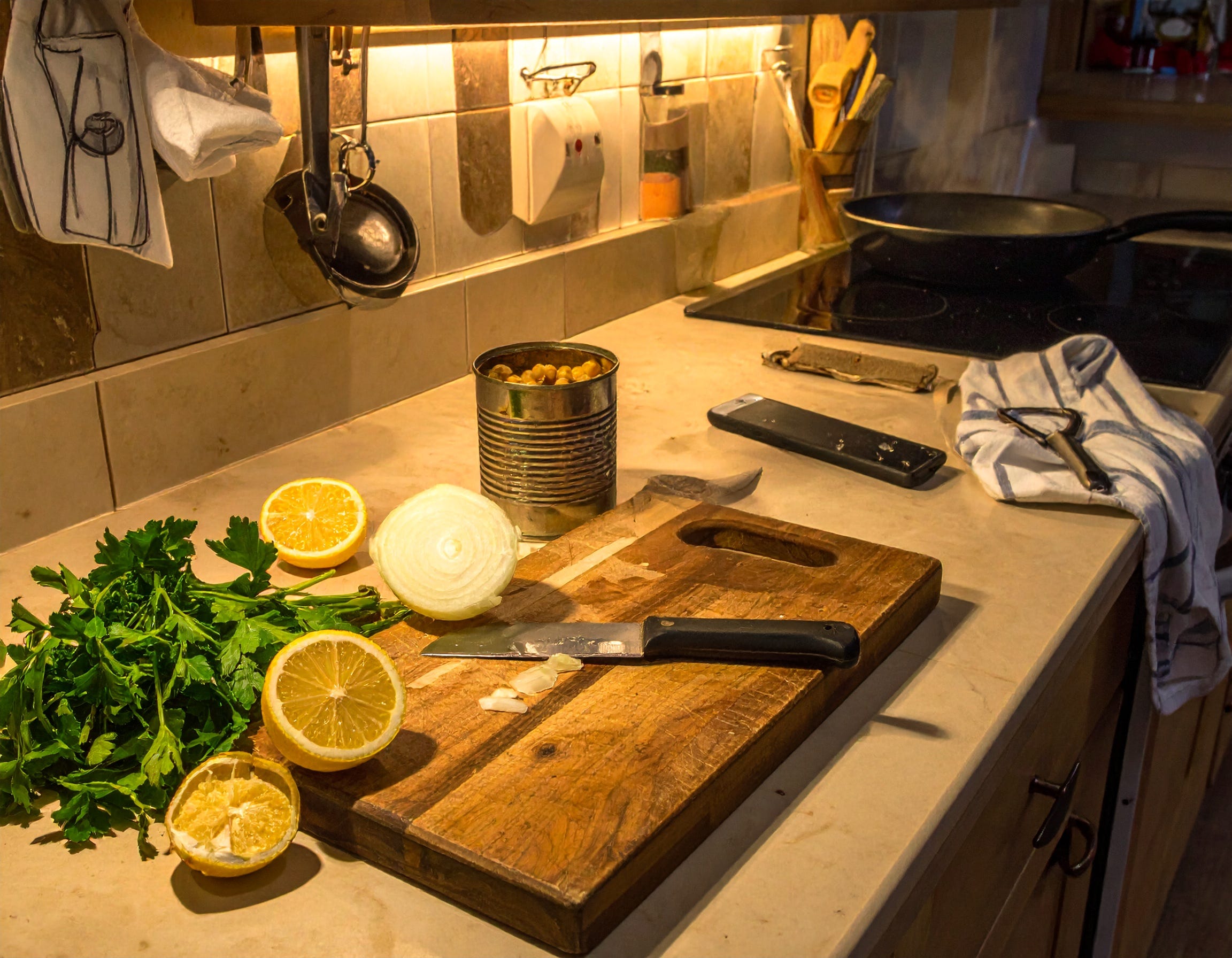
Ask someone why they do not cook more, and they will almost always say the same thing. They do not have time.
It is a clean, convincing answer. It forecloses the conversation. It positions the problem as external — a shortage of something that is outside their control — rather than internal, which would require a more complicated response. And it is, in most cases, not quite true.
This is not an accusation. It is an observation about how human beings think about time and effort, which is often inaccurately and in ways that protect us from harder questions. People who say they do not have time to cook are not lying. They genuinely experience their schedules as too full to accommodate cooking. But the experience of having no time and the reality of having no time are different things, and understanding the difference is the first step toward actually cooking more.
Because here is what the research on time use consistently shows. The average American adult spends approximately three hours per day on leisure activities — television, social media, recreational browsing, passive entertainment of various kinds. Very few of those people would say they have that much free time every day. They would say they are busy. They would say they do not have time to cook. And they would also spend three hours watching screens.
This is not a moral point about how people should spend their leisure time. It is a factual point about what the time excuse actually is. In most cases it is not a claim about calendar impossibility — there is literally no thirty-minute window in which cooking could occur. It is a claim about priority and energy, dressed up as a claim about time. Which means that solving it requires addressing priority and energy rather than finding more hours.
What “no time” usually actually means
When someone says they do not have time to cook, one of several things is usually true.
The most common is that they have time but not energy. The end of a working day — when cooking most needs to happen — is the point of lowest energy in most people’s daily cycle. Decision-making is depleted. Willpower is low. The effort of assembling a meal from ingredients in the fridge, when the alternative is ordering something that requires no effort at all, feels overwhelming in a way that it would not feel at 10am. This is not laziness. It is cognitive depletion, and it is real and significant. The solution is not to try harder at 7pm. It is to reduce the decision and effort requirements of cooking at 7pm so that they can be met by the depleted version of yourself rather than the fully resourced morning version.
The second most common is that they have time but not a plan. Cooking without a plan is significantly harder and slower than cooking with one. If you arrive home not knowing what you are going to make, you spend ten to fifteen minutes deciding — which depletes the energy you needed to actually cook — and then potentially more time checking whether you have the ingredients, and by the time you have resolved these questions it is 8pm and you are past the point where cooking feels manageable. A thirty-second decision made before you leave for work in the morning eliminates this problem entirely. The time was always there. The plan was not.
The third is that they have time but not the skill to use it efficiently. Cooking without established skill takes longer than cooking with it, which means that a person with limited kitchen experience genuinely cannot make the same meal in thirty minutes that an experienced cook can. The perception of time shortage is real — for them, making a good dinner does take an hour, because they have not yet built the efficiency that comes with practice. The solution here is not to find more time but to build skill — specifically the small repertoire of reliable, fast meals that gets faster every time it is made.
The fourth, less common but worth naming, is that they genuinely do have extremely limited time — a schedule so demanding, a set of commitments so extensive, that even thirty minutes in the evening is not reliably available. This is a real situation and it deserves a real response rather than the usual time-management advice. The response is not to cook more on weeknights. It is to cook differently — in ways that require very little active time even if they require some planning — and to accept that some weeks will involve more convenience food than others without treating that as a failure.
The energy problem and how to solve it
Cognitive depletion at the end of the day is not a personal weakness. It is a predictable feature of how human energy works, and it affects everyone. The solution is environmental design rather than willpower.
The most important environmental design principle for weeknight cooking is reducing decisions. Every decision made in the evening costs energy that is already in short supply. A plan for what to cook eliminates the biggest decision. A stocked pantry eliminates the ingredient-checking decision. A handful of meals you know so well you could make them half-asleep eliminates most of the remaining decisions. The goal is to make the cooking happen almost automatically — not because you are forcing yourself through it but because you have set up the conditions under which it is the obvious, easy thing to do.
The second principle is starting smaller than feels necessary. The person who arrives home depleted and tells themselves they need to cook a proper dinner from scratch is setting themselves up to fail, because a proper dinner from scratch is not what the depleted version of themselves can manage. The person who tells themselves they just need to boil some pasta and open a jar of good sauce, or make scrambled eggs on toast, or heat up the soup from two days ago — that person can usually manage the task and often finds, once started, that they have more energy than they thought. Starting is the hard part. The meal that begins as scrambled eggs sometimes becomes something better once you are in the kitchen and the momentum is there.
The third principle is that convenience is not the enemy of cooking — it is the ally. Prewashed salad greens, pre-chopped vegetables, canned beans, frozen grains, rotisserie chicken — these are not failures of domestic commitment. They are tools that reduce the demands of cooking at the point when effort is hardest to sustain, and using them strategically is what allows cooking to happen on the evenings when it otherwise would not.
The planning problem and how to solve it
The absence of a plan is responsible for more failed weeknight cooking attempts than any other single factor. It is also the most easily fixed, because planning requires almost no time and almost no energy when done at the right moment — which is not at 7pm on a Tuesday but at some earlier point in the day or week when cognitive resources are more available.
The minimum viable plan is a single decision made each morning: what are you eating for dinner tonight? Not a detailed recipe, not a shopping list — just a decision. Pasta with olive oil and parmesan. Stir-fried rice with egg and whatever vegetables are in the fridge. The lentil soup from last week, reheated. The decision takes thirty seconds and eliminates the most energy-expensive part of cooking — the deliberation that happens at the worst possible moment.
The slightly more robust version is a weekly plan — not a rigid schedule that creates stress when it is deviated from, but a loose outline of what the week’s dinners will look like, made once on Sunday and used as a reference rather than a mandate. Five dinners loosely planned, with some flexibility built in for the nights when the plan needs to change. This weekly plan also enables effective grocery shopping — you buy what you need for the week rather than shopping broadly and hoping the pieces add up to actual meals.
The key feature of any useful plan is that it is designed for the realistic version of the week rather than the optimistic version. The optimistic weekly plan has five elaborate home-cooked dinners and zero takeout. The realistic plan has three or four home-cooked dinners of varying ambition, one night that will probably be takeout or leftovers, and one night that is completely open. The optimistic plan fails by Wednesday. The realistic plan mostly holds.
The skill problem and how to solve it
Skill is the dimension of the time problem that most people do not acknowledge, because acknowledging it requires admitting that the issue is not time but competence — and competence is improvable, which means the problem is solvable but requires effort rather than just a better schedule.
Weeknight cooking skill is not about knowing many recipes. It is about knowing a small number of recipes so well that they require no thought, no reference to instructions, and minimal active attention. Eight to ten meals cooked so frequently and so reliably that they have become automatic — this is the repertoire that makes weeknight cooking fast. Not fifty recipes tried once and mostly forgotten. A handful of recipes made weekly or fortnightly until they are completely internalized.
Building this repertoire takes time — perhaps six months to a year of regular cooking before it becomes truly automatic. During that period, cooking takes longer than it eventually will, which creates the circular problem of the time shortage: cooking takes longer because the skill is not built, and the skill is not built because there is no time to cook. The way out of the circle is to start with the simplest possible versions of the meals — one-pan dishes, pasta with simple sauces, eggs in various forms — and accept that they will take longer than you would like at first, knowing that they will take significantly less time as the months pass.
The genuine time shortage and what to do about it
For the small proportion of people for whom the time shortage is genuinely real — not a matter of priority or planning but of actual calendar impossibility — the weeknight cooking model needs to adapt rather than being abandoned.
The most effective adaptation is shifting the active cooking to a different time window. Weekend batch cooking — one to two hours on a Saturday or Sunday producing multiple components that can be assembled into meals across the week — concentrates the active cooking time in a period when it is more available and distributes its benefits across the evenings when time is most scarce. A batch of cooked grains, a pot of beans or lentils, a tray of roasted vegetables, and a simple sauce or dressing produces four or five weeknight meals that require only assembly — five to ten minutes of active time — rather than full cooking.
The other effective adaptation is building a repertoire of meals that are genuinely fast — fifteen minutes or less — rather than meals that are thirty minutes. Fifteen-minute meals exist: pasta with olive oil, garlic, and parmesan; scrambled eggs with toast and a simple salad; a grain bowl assembled from batch-cooked components; sardines on toast with a dressed salad. None of these are ambitious. All of them are genuinely fast, genuinely nourishing, and genuinely better than most takeout alternatives. The constraint of fifteen minutes narrows the options significantly but does not eliminate them.
What this actually requires
The honest answer to the time problem is that solving it requires a small investment of mental energy at a point when mental energy is available — usually at the weekend or on a weekday morning — in exchange for a significantly easier evening.
It requires deciding what to eat before you are hungry and depleted. It requires shopping for what you have decided rather than broadly and optimistically. It requires keeping a pantry stocked with the things that make fast cooking possible. It requires building a repertoire of reliable meals rather than attempting something new every night. And it requires making peace with the fact that some weeks will be better than others, that some evenings the takeout is the right call, and that none of this requires perfection to be worth doing.
The time was there all along. The conditions for using it were not. That is a solvable problem — and significantly more solvable than the alternative, which is continuing to believe that the obstacle is something outside your control when it is actually something you can design around.
What Joyvela is built to do about this
Every recipe in the Joyvela archive is thirty minutes or less. Every guide in The Library is designed to reduce the effort and decision-making that make weeknight cooking hard. Every ingredient spotlight is chosen for its versatility — because an ingredient that can be used three different ways reduces the planning required significantly.
We are not going to solve the time problem with a productivity system or a complicated meal planning framework. We are going to solve it one Tuesday at a time — by making what you cook on Tuesday so fast, so reliable, and so genuinely good that it becomes the obvious choice rather than an effortful one.
That is the whole plan. And it starts tonight.