
The spice guide
Every spice worth owning, what it pairs with, and how to use it before it goes stale.

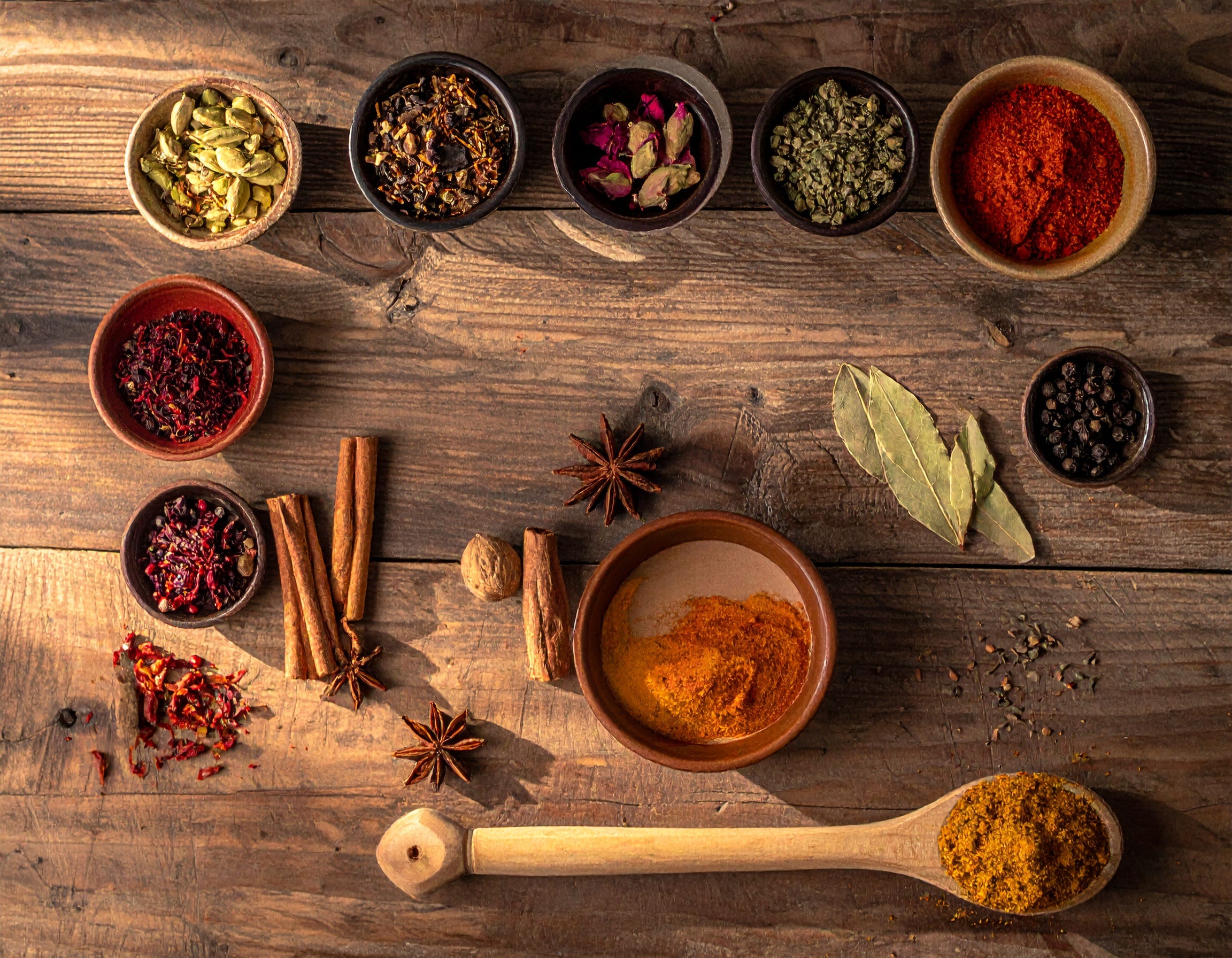
Introduction
Most spice cupboards contain too many spices and use too few of them.
The collection accumulates gradually — a jar bought for one recipe, a spice blend picked up at a market, an ingredient that seemed useful at the time — until the cupboard is full of containers that haven’t been opened in months, most of which smell of nothing when you do open them, and most of which will be thrown away without ever having significantly improved anything you cooked.
This is the wrong way to approach spices. Not because having a wide collection is inherently bad, but because spices that are not used regularly go stale quickly, and stale spices do not improve food. They sit in the food, invisible and flavorless, creating the illusion of seasoning without delivering any of its benefit.
The right approach is narrower and more intentional. A smaller collection of spices used frequently and replaced regularly will always produce better food than a larger collection used sporadically and kept until the spices have lost their potency. Twelve spices that you reach for every week will do more for your cooking than forty spices reached for once a month.
This guide is that smaller, better collection. It covers every spice genuinely worth owning — thirty in total, organized by flavor profile and culinary tradition — with specific guidance on what each one pairs with, how to use it before it loses its potency, and how to tell when it has gone past its best. At the end, there is a reference section with the complete list and a set of spice blends you can make at home from what is in the cupboard, plus three recipes that demonstrate spice-led cooking at its most practical and most satisfying.
How spices work — and why freshness matters
Spices are dried plant matter — seeds, bark, roots, berries, flower buds — and their flavor comes from volatile aromatic compounds that begin to dissipate from the moment the spice is harvested and processed. Heat, light, moisture, and time all accelerate this process. A spice that smells intensely fragrant when you open the jar is a spice that will improve your food. A spice that smells of very little is a spice that will add very little.
Ground spices lose their potency faster than whole spices because grinding increases the surface area exposed to air, accelerating the loss of aromatic compounds. As a general rule: ground spices are best used within six to twelve months of purchase, whole spices within two to three years. These are not hard expiration dates — a ground spice at fourteen months is not suddenly useless — but they are useful guidelines for deciding when to replace rather than continue using.
The test is simple. Open the jar and smell. If the aroma is vivid and recognizable, the spice has life left in it. If it smells faint, flat, or of nothing at all, replace it. No amount of extra quantity will compensate for lost potency — you will simply add more of a spice that is not contributing and potentially throw off the balance of the dish.
Storage that actually preserves potency
Store spices in airtight containers, away from heat and light. The cupboard next to the stove is the worst possible location — heat and steam from cooking degrade spices faster than almost anything else. A cool, dark cupboard away from the cooktop is ideal. Clear glass jars look appealing but expose spices to light — dark glass or opaque containers are better if you care about longevity.
Buy spices in smaller quantities more frequently rather than in large quantities infrequently. A small jar used up in three months is more economical than a large jar that is still half-full at eighteen months.
