
What Healthy Eating Really Looks Like in Everyday Life

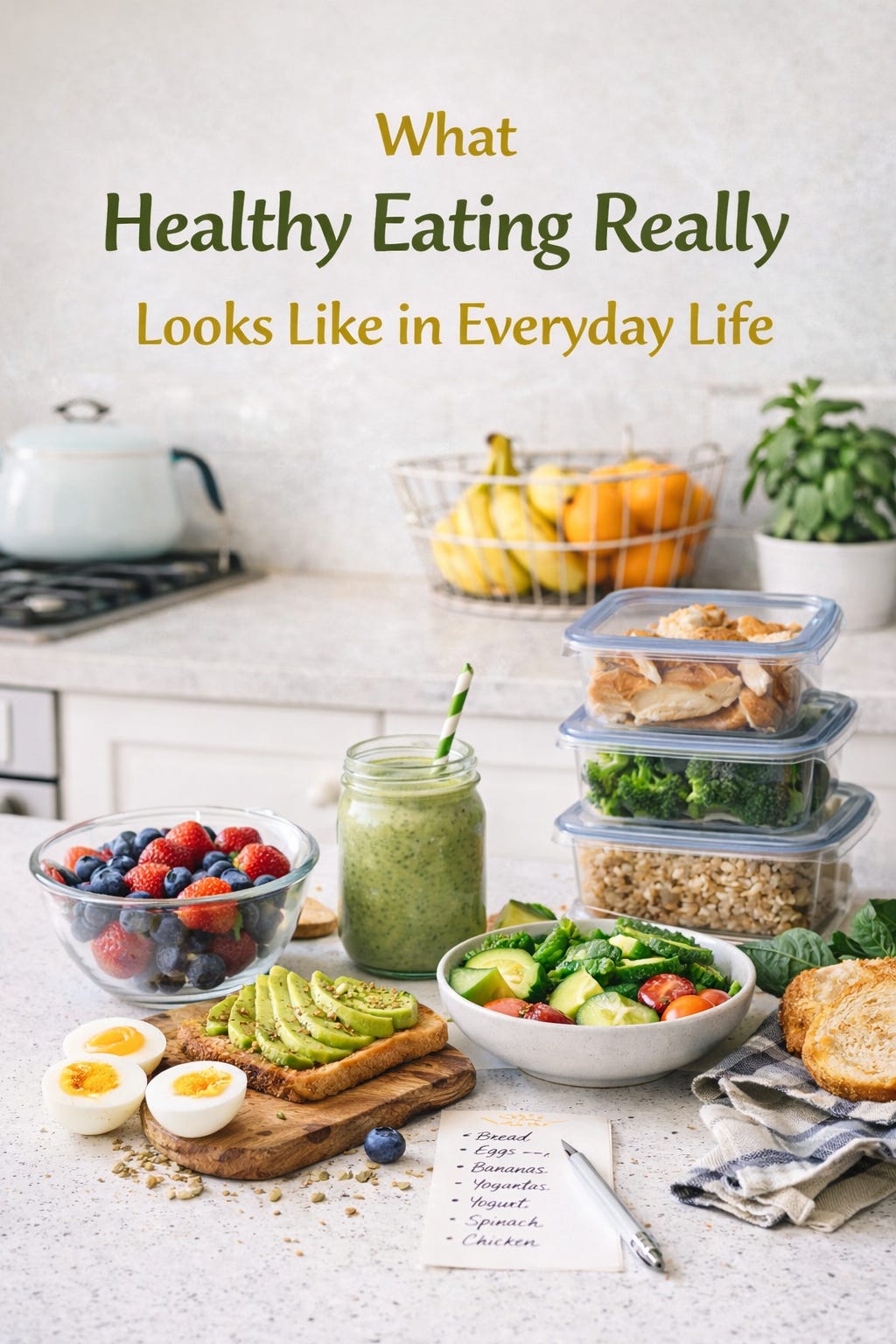
Online, healthy eating often looks spotless and highly organized. There are glass containers lined up in a perfect row, smoothies in colors that barely occur in nature, and lunches that seem to require both excellent planning and an unusual amount of free time. It can start to feel more like a performance than a way to nourish yourself.
Real life is rarely that polished. Real life is getting home late, opening the fridge, and trying to decide whether dinner can be built from eggs, bread, and one surviving bell pepper. Real life is buying fresh spinach with hope, forgetting about it for three days, and then trying to recover with frozen broccoli. Real life is wanting to eat in a way that feels good without turning every meal into a project.
That is why healthy eating works best when it fits into everyday life. It has to hold up when you are busy, when you are tired, when money feels a little tight, when you do not want to cook, and when your motivation is not exactly glowing. A style of eating that only works on your most organized days is not sustainable. It is an event.
Healthy eating in real life is often quieter than people expect. It is less about chasing perfect meals and more about building a rhythm you can come back to again and again. It is choosing foods that help you feel steady, full, energized, and cared for, while still leaving room for convenience, comfort, and the fact that you are a human being with a life.
That means healthy eating does not need to look strict to be effective. It does not need to be expensive to count. It does not need to be photogenic to matter. Most of the time, it looks like a handful of practical habits repeated often enough that they become normal.
Healthy Eating Is More About Pattern Than Perfection
This is the first shift that makes healthy eating feel more manageable.
A lot of people assume healthy eating depends on getting every meal exactly right. They look at a single lunch, a single dinner, or a weekend that felt messier than usual and decide they are failing. That way of thinking makes food feel much heavier than it needs to be.
In everyday life, healthy eating is much more about the overall pattern of how you eat than whether every plate is impressive. One breakfast that leans sweet is not a problem. One takeout dinner is not a problem. A birthday meal, a late-night snack, a vacation, or a random Wednesday where all you want is toast is not the thing that makes or breaks your health.
What matters more is what your regular rhythm looks like.
Do most of your meals have enough substance to keep you going?
Are you eating food that gives you energy instead of leaving you drained?
Do you have a few reliable options at home that make better choices easier?
Are you feeding yourself consistently instead of swinging between restriction and chaos?
Those are far more useful questions than whether dinner was “clean enough” or whether you ate perfectly all week.
A healthy pattern can include:
simple breakfasts you actually enjoy
lunches that have real staying power
dinners that are easy enough to repeat
snacks that help, not just fill space
room for comfort foods without guilt
enough flexibility that life does not knock you completely off course
That is usually what everyday healthy eating looks like. It looks normal. It looks repeatable. It looks like a way of eating that does not require a dramatic restart every Monday.
A Healthy Meal Is Not a Moral Achievement
One reason food becomes stressful is that people start attaching too much meaning to it. A salad gets labeled “good.” Pasta gets labeled “bad.” A protein-packed lunch feels responsible. A cookie feels like a character flaw. That kind of thinking can creep in quietly, but once it settles, eating becomes emotionally exhausting.
Food has nutritional value, yes. It can support your energy, fullness, mood, and long-term health. But a meal is not a moral report card. It is just food.
That matters because when eating turns moral, it often becomes extreme. People either aim for perfection or slide into a sense of having “ruined” the day. Then one less balanced meal turns into an entire evening of giving up. That pattern usually has far less to do with nutrition and far more to do with pressure.
Healthy eating in real life leaves room for neutrality. It allows you to look at a meal and ask practical questions instead of dramatic ones.
You can ask:
Will this keep me full?
Does this meal have enough protein or fiber?
Could I add fruit or vegetables here?
Do I need a little more substance?
Would a side dish make this feel more complete?
Those questions help. Shame rarely does.
The more neutral your relationship with food becomes, the easier it is to make consistent choices. You are no longer trying to prove that you are disciplined. You are just trying to feed yourself in a way that works.
Balanced Eating Usually Looks Simpler Than Expected
The phrase balanced meal can sound more complicated than it really is, as if it requires precise measurements and detailed charts. In reality, balance is often quite simple.
A balanced meal usually includes:
a source of protein
a source of carbohydrates
a source of fiber, often from produce or beans
a source of fat or flavor that makes the meal satisfying
That is it. Not glamorous, but very useful.
Protein can come from eggs, Greek yogurt, chicken, tuna, tofu, cottage cheese, beans, lentils, or salmon. Carbohydrates might be bread, rice, oats, pasta, potatoes, tortillas, or fruit. Fiber can show up through vegetables, fruit, beans, oats, or whole grains. Fat and flavor may come from olive oil, avocado, nuts, cheese, nut butter, tahini, or a sauce you actually like.
When meals include a mix like that, they tend to feel more complete. They usually keep you full longer and help avoid that irritating cycle where you eat, feel unsatisfied, and start prowling the kitchen again an hour later.
A balanced breakfast might be eggs on toast with fruit.
A balanced lunch might be a turkey sandwich with carrots and an apple.
A balanced dinner might be rice, chicken, broccoli, and avocado.
A balanced snack might be Greek yogurt with berries or an apple with peanut butter.
Nothing about that requires perfection. It only asks for enough structure that your meals can actually do their job.
Healthy Eating Includes Convenience
This is the part many people need to hear more often.
Healthy eating does not have to be made from scratch to count. You are allowed to use shortcuts. In fact, shortcuts are often what make healthy habits sustainable.
There is no prize for making life harder than it needs to be.
Rotisserie chicken can be part of healthy eating.
Microwave rice can be part of healthy eating.
Frozen vegetables can be part of healthy eating.
Bagged salad, canned beans, pre-cut fruit, yogurt cups, store-bought soup, frozen salmon, protein-rich wraps, and simple pantry meals can all fit beautifully into a healthy routine.
A lot of people lose momentum because they think healthy eating demands too much time and effort. Then, when life gets busy, they feel like there is no way to keep up. But healthy eating that depends on unlimited energy is too fragile for normal life.
Convenience foods can actually protect your routine. They help bridge the gap between good intentions and tired evenings. They make it easier to build meals when your brain is done making decisions for the day.
A practical dinner might be:
rotisserie chicken, microwave rice, and frozen broccoli
canned soup with toast and a boiled egg
pasta with jarred sauce, spinach, and tuna
a grain bowl built from leftovers and hummus
a baked potato with cottage cheese and steamed vegetables
These meals may not look dramatic online, but they hold up beautifully in real life.
Healthy Eating Still Includes Food You Love
This is where many people get stuck. They assume eating well means slowly removing every enjoyable food until meals feel worthy but bleak. That approach tends to last about as long as your patience.
A healthier way to eat is not a life sentence of dry chicken and joyless vegetables. It is an eating pattern that supports you while still feeling like your life.
You can eat bread and still eat well.
You can eat pasta and still eat well.
You can enjoy dessert and still eat well.
You can order takeout and still have a healthy overall routine.
You can love comfort food and still care about nutrition.
In fact, allowing room for foods you genuinely enjoy usually makes healthy eating easier to maintain. When nothing is forbidden, food often loses some of its emotional charge. Meals become calmer. Choices feel less dramatic. You stop bouncing between “being good” and “starting over.”
Healthy eating in everyday life often looks like balance across a week, not rigid control within every single day.
That could mean:
oatmeal and fruit for breakfast, then pizza with salad for dinner
yogurt and berries in the morning, then tacos later
a week full of simple meals, plus dessert with friends on Friday
a nourishing lunch followed by movie-night popcorn
That is not failure. That is life.
Breakfast Does Not Need to Be Fancy, but It Helps When It Has a Job
Breakfast is one of the easiest places to make healthy eating feel more supportive.
A breakfast built mostly around refined carbs can wear off quickly, leaving you hungry and distracted by midmorning. Breakfast does not have to be huge or complicated, but it often works better when it includes at least one or two elements that provide staying power.
That might mean:
Greek yogurt with berries and oats
eggs with toast and fruit
oatmeal with peanut butter and banana
cottage cheese with fruit and nuts
a smoothie with yogurt, berries, spinach, and milk
A good breakfast is not about being elaborate or visually impressive. It is about helping the rest of the morning go more smoothly. If your breakfast leaves you full, clear-headed, and less likely to hunt for random snacks an hour later, it is doing its job.
And yes, breakfast can also be simple. Very simple. Healthy eating in real life often depends on food you can make while still barely awake.
Lunch Needs More Respect Than It Usually Gets
Lunch is where a lot of people quietly unravel.
They eat a lunch that looks light and virtuous but is not remotely filling, then spend the afternoon wanting snacks, losing focus, or counting the minutes until dinner. A better lunch is usually less about being delicate and more about being useful.
A satisfying lunch often includes:
a clear protein source
enough carbs to support energy
fruit or vegetables for fiber and variety
enough volume that it feels like a real meal
This can look like:
a chicken wrap with fruit
a turkey sandwich with carrots and yogurt
a rice bowl with beans, avocado, and vegetables
leftover salmon with potatoes and a salad
hummus, pita, cucumber, tomatoes, and boiled eggs
tuna on toast with fruit on the side
Healthy eating in real life does not require an exciting lunch every day. Repeating lunches is allowed. In fact, repetition is often helpful. It reduces decision fatigue and makes decent choices more automatic.
There is a lot of freedom in knowing lunch does not have to be interesting. It only has to carry you through the afternoon without betrayal.
Dinner Is Often About Lowering the Bar in the Best Way
By dinner, people are tired. Even people with good intentions are tired. This is why healthy eating often succeeds or fails at the level of dinner expectations.
If your standard for dinner is too high, you will wear yourself out quickly. If your standard is practical, warm, and manageable, you are much more likely to stay steady.
Healthy dinners in everyday life often look like:
chicken, rice, and broccoli
salmon with roasted potatoes and green beans
pasta with spinach, white beans, and Parmesan
bean tacos with avocado and salsa
stir-fry with tofu, frozen vegetables, and rice
a baked sweet potato with black beans and Greek yogurt
scrambled eggs, toast, and fruit
soup, a sandwich, and a side salad
The theme here is not perfection. It is repeatability.
The best dinner habits usually come from having five or six options that are easy enough to make even when you are not in the mood. That is why “good enough” dinners are often the backbone of a healthy routine. They rescue weeknights. They reduce takeout panic. They give structure to evenings when your brain wants to clock out early.
Snacks Are Not the Problem, but Unsatisfying Snacks Often Are
Snacks get blamed for a lot. In reality, snacking itself is not the issue. Sometimes you genuinely need a snack because you are hungry, your meals were too light, or your schedule is stretched.
Where people often get frustrated is when snacks do not satisfy them. They grab foods that are quick but not very filling, then end up wanting more food almost immediately.
A more supportive snack often includes protein, fiber, fat, or a mix of the three.
That can look like:
Greek yogurt with fruit
an apple with peanut butter
nuts and grapes
hummus with carrots and crackers
cottage cheese with berries
cheese and fruit
a boiled egg with toast
roasted chickpeas
The goal is not to make every snack a nutrition masterpiece. It is simply to choose options that do a better job of holding you over. Healthy eating in real life is often about reducing friction, and satisfying snacks can do that beautifully.
Healthy Eating Has to Work When Motivation Is Low
This may be the most practical truth of all.
Anyone can eat well for a day or two when motivation is high. The real question is what your habits look like when motivation is ordinary, or low, or nowhere to be found. That is where real-life healthy eating lives.
On those days, the routines that help most are usually very simple:
keeping easy protein options around
having frozen vegetables in the freezer
using microwave grains
buying fruit you actually enjoy
repeating a few dependable meals
keeping bread, eggs, yogurt, beans, oats, and rice on hand
accepting that convenience is allowed
Low-motivation healthy eating might look like toast with eggs and fruit. It might look like Greek yogurt with granola and berries. It might look like leftovers in a bowl with a sauce that saves the entire situation. It might look like store-bought soup with an extra side of protein and toast.
That still counts. It all counts.
A healthy routine should not fall apart the second life gets chaotic. It should bend. It should adapt. It should offer you easier options instead of demanding a full performance.
Your Kitchen Does Not Need to Be Perfect, Just Helpful
A healthy kitchen is not the one with the prettiest shelves. It is the one that makes feeding yourself easier.
That usually means keeping practical staples around:
eggs
Greek yogurt
cottage cheese
canned beans
lentils
tuna
chicken
tofu
oats
rice
potatoes
bread
fruit
frozen vegetables
leafy greens
nut butter
hummus
olive oil
cheese
herbs, spices, and sauces you enjoy
When your kitchen has enough useful ingredients to build a few decent meals, healthy eating becomes less dramatic. You do not have to rely on willpower every time you are hungry. You only need a system that makes the better option easier to reach for.
That is one of the most underrated parts of nutrition. Environment matters. Access matters. Convenience matters. A lot of healthy eating gets easier when your groceries quietly support the kind of meals you want to eat.
Healthy Eating Is Allowed to Be Repetitive
People often think they need endless variety to eat well. In truth, repetition can be one of the most helpful tools in a healthy routine.
There is nothing wrong with repeating breakfasts you like. There is nothing wrong with having the same two or three lunches most weeks. There is nothing wrong with rotating familiar dinners and buying the same groceries again and again.
Repetition reduces stress. It shortens the time between hunger and food. It also makes grocery shopping much easier. It helps you notice what actually works for your body and your schedule.
A repetitive routine might include:
oatmeal three mornings a week
yogurt bowls on busy mornings
sandwiches or grain bowls for lunch
two reliable chicken dinners
one pasta night
one taco night
one very easy leftovers or soup night
That may not sound exciting, but excitement is not the main job of an everyday food routine. Support is.
Healthy Eating Feels Better When It Is Gentle
Harshness rarely produces lasting food habits.
People often try to shame themselves into eating better. They criticize what they ate yesterday, promise extreme changes tomorrow, and act as though health begins with self-punishment. That approach can create a burst of effort, but it usually does not create peace or consistency.
A gentler approach works better for many people:
notice what is not working without attacking yourself
add useful foods instead of only focusing on cutting foods out
keep expectations reasonable
build routines around your real schedule
allow for off days without turning them into personal failure
Healthy eating in everyday life should feel supportive. It should help you move through the day with more steadiness and less food-related stress. It should not feel like a never-ending test you are always close to failing.
That is why gentleness matters. It makes room for flexibility, and flexibility is often what keeps a habit alive.
Final Thoughts
What healthy eating really looks like in everyday life is usually far less dramatic than people imagine.
It looks like balanced meals most of the time, not perfect meals all the time. It looks like toast with eggs, yogurt with berries, sandwiches that actually fill you up, dinners you can make when you are tired, frozen vegetables that save the week, and enough flexibility that bread, pasta, dessert, and takeout do not feel like a crisis.
It looks like feeding yourself in a way that supports your body while still respecting your time, your budget, your energy, and your actual life.
That kind of healthy eating may not be flashy, but it is powerful. It is the kind that lasts. It is the kind you can return to after a busy week, a stressful month, a holiday, a vacation, or a day where everything felt a little off. It does not ask you to be perfect. It only asks you to keep coming back.
And honestly, that is what real healthy eating usually is.
Not a performance.
Not a punishment.
Not a total personality change.
Just a practical, steady way of feeding yourself well on ordinary days.