
What junk food actually does to your body — without the scare tactics
The Healthy-ish Reset · Post 02 of 10

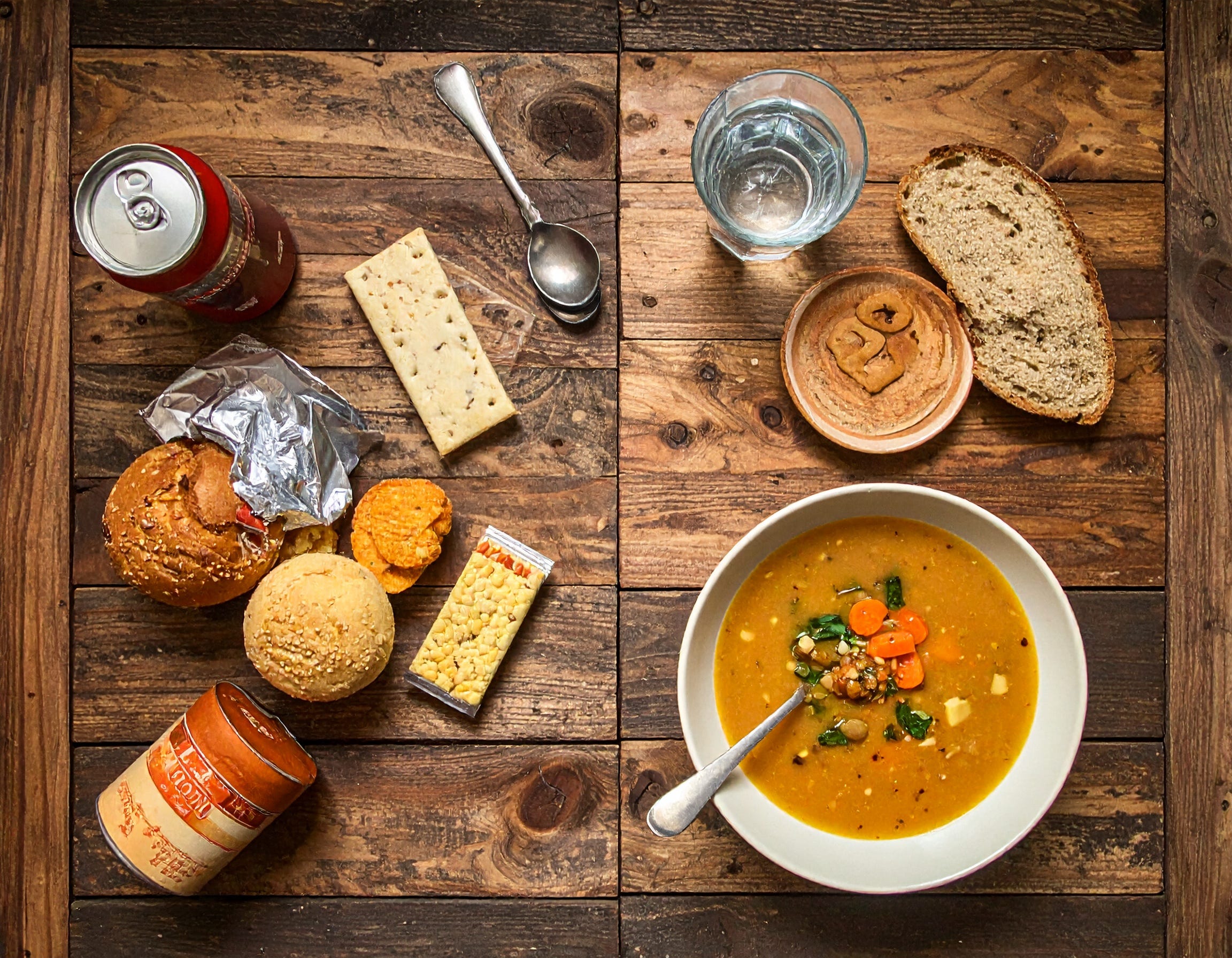
There is no shortage of content telling you that junk food is bad for you. What there is a shortage of is content that explains, calmly and accurately, what it actually does — the mechanisms, the real effects, the things worth knowing — without trying to scare you into change or make you feel like every packet of crisps is quietly shortening your life.
This post is that explanation.
It is not a list of foods to avoid. It is not a set of rules. It is information — the kind that makes the choices you already want to make a little easier to understand and a little easier to stick to. Because knowing why something affects you the way it does is more useful than being told it is bad and left to manage the rest on willpower alone.
A note before we begin: The Healthy-ish Reset is a philosophical approach to building a healthier, more peaceful relationship with food. It is not medical or nutritional advice, and it is not a substitute for guidance from a registered dietitian or your doctor. If you have specific health concerns, a medical condition, or a complicated history with food and eating, please speak with a qualified professional who can support you personally. What you will find here is a way of thinking — not a prescription.
What we mean by junk food
Before anything else, a definition — because “junk food” is a loose term and it helps to be precise about what we are actually talking about.
The more useful term is ultra-processed food. Researchers use this category to describe foods that go well beyond basic processing — salting, fermenting, cooking — into formulations that involve industrial ingredients rarely found in a home kitchen: emulsifiers, flavor enhancers, stabilizers, modified starches, hydrogenated oils, and various additives designed to extend shelf life, improve texture, or intensify flavor.
Ultra-processed foods include the obvious things — fast food, soda, packaged snacks, instant noodles — but also plenty of things that sit in a gray area: many breakfast cereals, flavored yogurts, packaged bread, ready meals, and plant-based meat alternatives. The category is not defined by whether something tastes indulgent. It is defined by how it is made.
This distinction matters because “junk food” as a moral category — the forbidden stuff, the bad stuff, the stuff you are not supposed to eat — is less useful than understanding what these foods actually do in the body and why. Once you understand the mechanism, the choices become clearer.
What happens to your hunger signals
One of the most well-documented effects of a diet high in ultra-processed food is disruption to the body’s hunger and fullness signals.
Under normal circumstances, the body has a sophisticated system for regulating appetite. Hormones like leptin and ghrelin communicate with the brain about energy availability — telling you when you need to eat and when you have had enough. This system is not perfect, but it is generally reliable when it is working well.
Ultra-processed foods interfere with this system in several ways. They are typically engineered to be highly palatable — meaning they are formulated to be easy to eat past the point of fullness. The combination of fat, salt, sugar, and texture that characterizes many of these foods activates reward pathways in the brain in a way that can override the body’s normal satiety signals. You can be genuinely full and still want more. This is not weakness. It is biology.
There is also the question of eating speed. Ultra-processed foods are generally soft, easy to chew, and quick to consume. Research suggests that eating quickly reduces the time available for satiety hormones to reach the brain — which can mean finishing a large amount of food before the fullness signal arrives. Foods that require more chewing and take longer to eat tend to produce a more reliable sense of fullness, even at lower calorie levels.
None of this means your hunger cannot be trusted. It means that certain foods make it harder to hear what your body is telling you — and that eating more whole, less processed food tends to make those signals clearer and more reliable over time.
What happens to your energy
If you have ever noticed a slump in energy an hour or two after a meal heavy in refined carbohydrates — white bread, sugary cereals, sweet snacks — you have experienced the blood sugar spike and subsequent drop that is one of the more immediate effects of a diet high in ultra-processed food.
Refined carbohydrates are digested quickly. That rapid digestion causes blood glucose to rise sharply, triggering a corresponding release of insulin to bring it back down. When that correction happens quickly, blood sugar can drop below its starting point — leaving you feeling flat, foggy, or hungry again shortly after eating, even if you consumed a significant amount of food.
This cycle is not catastrophic in isolation — the body is designed to manage blood sugar fluctuations — but repeated throughout the day, across weeks and months, it contributes to a pattern of inconsistent energy that many people assume is just how they are. It is often not. It is frequently a consequence of what they are eating, and one of the things people notice most quickly when they shift toward less processed food is that their energy becomes more stable and more predictable.
Fiber slows digestion. Protein increases satiety. Fat moderates the speed at which carbohydrates enter the bloodstream. Whole foods tend to contain combinations of these things naturally. Ultra-processed foods often strip them out in pursuit of palatability and shelf stability — which is part of why they produce the energy patterns they do.
What happens to your relationship with food
This is the effect that gets talked about least, and it may be the most significant one for the purposes of this series.
A diet built predominantly on ultra-processed food tends, over time, to erode the experience of eating real food as satisfying. This is not a moral failing or a loss of self-control. It is a straightforward consequence of the intensity of the flavor engineering in these products. Foods formulated to hit specific combinations of salt, fat, and sweetness at very high intensity can make plainer foods — a bowl of lentil soup, a piece of roasted fish, a simple salad — taste underwhelming by comparison.
This is important to understand because it explains something many people experience when they try to change their diet: the first few weeks feel like deprivation, not because the food is objectively bad, but because the palate has been calibrated to an intensity that whole food simply does not match. The good news — and there is good news — is that this recalibrates. Research and clinical experience both suggest that taste preferences are not fixed. For many people, a few weeks of eating less ultra-processed food brings a gradual but real increase in the enjoyment of simpler, less intensely flavored food. The timeline varies — for some it is quicker, for others it takes longer — but the direction of travel is consistent.
It is also worth knowing that in the first few days of significantly reducing ultra-processed food — particularly if you are also cutting back on caffeine — some people notice headaches, low energy, or irritability. This is temporary and a normal part of adjustment, not a sign that something is wrong. Knowing it can happen makes it easier to move through rather than interpret as a reason to stop.
This is one of the reasons The Healthy-ish Reset is a lifetime approach rather than a short program. Recalibration takes longer than a week. But it does happen, and when it does, eating well stops feeling like sacrifice and starts feeling like preference.
What the evidence actually says — proportionately
A large and growing body of research associates high consumption of ultra-processed food with increased risk of a range of health outcomes, including cardiovascular disease, type 2 diabetes, certain cancers, depression, and all-cause mortality. Several large prospective studies — including research published in the British Medical Journal and The Lancet — have found these associations even after controlling for overall diet quality and other lifestyle factors.
This is worth knowing. It is also worth holding proportionately.
Risk associations in nutritional epidemiology are population-level findings. They tell us about patterns across large groups of people over long periods of time. They do not tell us that any individual meal or food choice causes harm, or that a life with some ultra-processed food in it is a compromised one. The evidence points toward the overall pattern of what you eat — not individual foods, individual days, or individual choices — as the thing that matters most for long-term health.
Which brings us back to the healthy-ish position: most of your eating, most of the time, built around food that nourishes you. That is the pattern the evidence supports. Not perfection. Not elimination. A reliable, sustainable baseline — with room for everything else.
What this means in practice
Understanding how ultra-processed food affects hunger, energy, and the experience of eating is useful not as a reason for alarm, but as a framework for change that does not rely on willpower.
When you know that certain foods are engineered to override your fullness signals, you can approach them differently — not with fear, but with awareness. When you know that the energy slump after lunch is a consequence of what you ate rather than an immutable feature of your afternoons, you have something concrete to work with. When you know that the first few weeks of eating more whole food may feel less satisfying than you would like, you can give yourself the time that recalibration actually takes instead of concluding that it is not working.
None of this requires perfection. It does not require eliminating anything. It requires understanding — and the patience to let your body adjust to a different way of eating at the pace it actually needs.
Post 03 looks at the other side of this: not what processed food takes away, but what genuinely nourishing food gives you — and how to think about that without turning every meal into a nutrition calculation.
Before the next post
One practical thing this week.
Pay attention to how you feel two hours after your main meals — not in a tracking or logging way, just notice. Are you still satisfied, or already hungry again? Is your energy steady, or does it dip? You do not need to change anything yet. You are just starting to read the signals your body is already sending.
Post 03 arrives next week: The difference between food that nourishes you and food that just fills you.
The Healthy-ish Reset is a ten-part series — free for all Joyvela readers. All ten posts are available in the archive at joyvela.io.