
Why orthorexia is the eating disorder nobody talks about
When healthy eating stops being healthy.

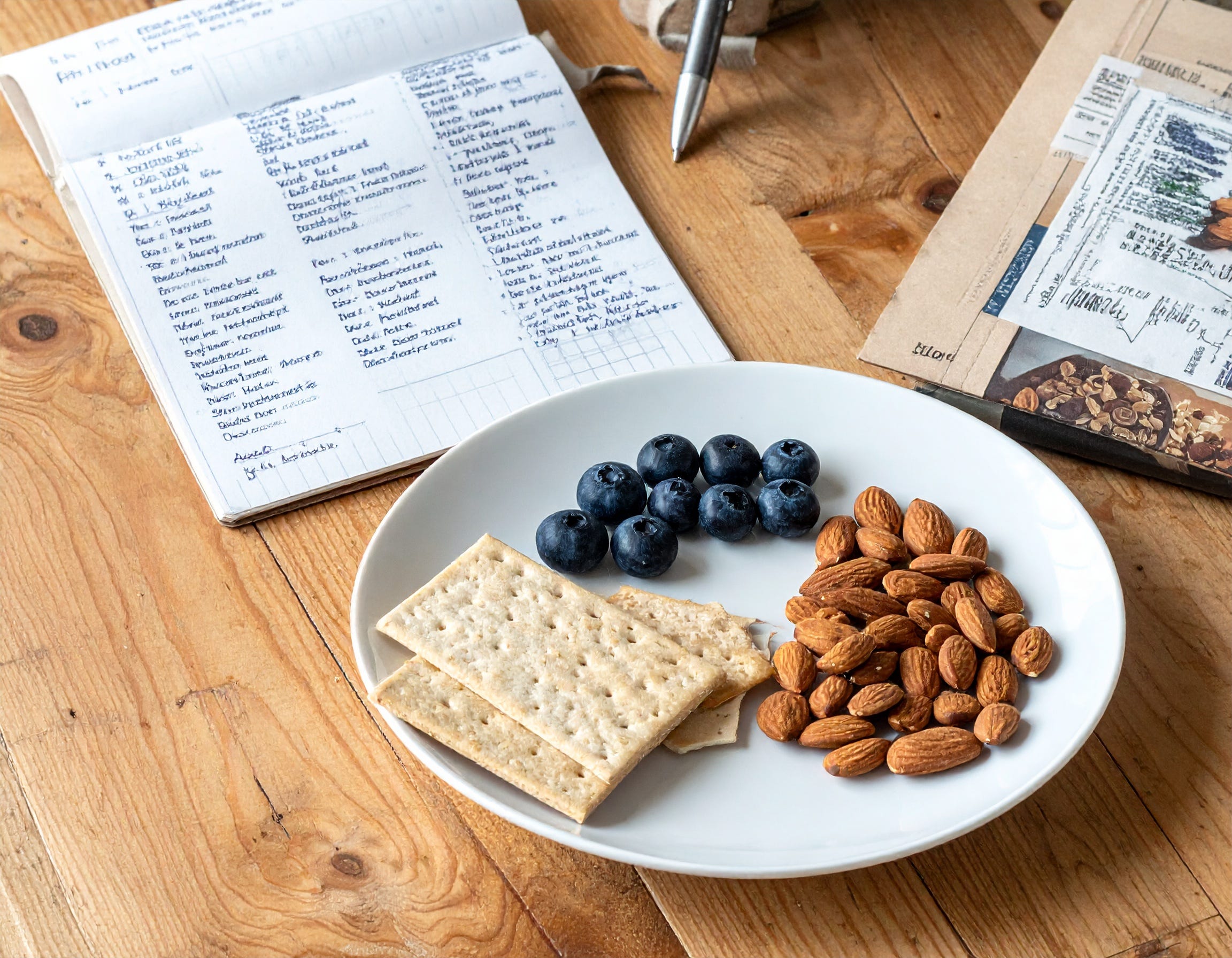
There is a point at which caring about what you eat stops being healthy.
Not a dramatic point, not a cliff edge, not a moment that announces itself clearly. A gradual one. A slow accumulation of rules that seemed reasonable when they were adopted, a tightening of the framework over time, a growing list of foods that are no longer allowed and a shrinking list of foods that are still safe. A relationship with eating that has moved, quietly and without fanfare, from nourishing to damaging — and that is almost impossible to see from the inside, because the whole thing looks, from the inside, like health.
This is orthorexia. And it is the eating disorder that the wellness industry created, sustains, and almost never talks about.
What orthorexia is
Orthorexia nervosa — the term was coined by physician Steven Bratman in 1997, from the Greek orthos meaning correct and orexis meaning appetite — is characterized by an obsessive focus on eating only foods one considers healthy or pure, to the degree that the obsession itself causes significant distress and impairment in daily life.
It is distinct from anorexia nervosa, which is primarily about restricting quantity of food in pursuit of weight loss. Orthorexia is about the quality and purity of food rather than the amount. The person with orthorexia may eat adequate calories — may even eat generously — but the rules governing what those calories can consist of have become so rigid and extensive that eating has ceased to be a normal, flexible, pleasurable part of life and has become instead a source of constant vigilance, anxiety, and distress.
Orthorexia is not yet formally recognized as a distinct diagnosis in the main psychiatric diagnostic manuals, which is part of why it remains underdisc ussed and underdiagnosed. But the clinical and research literature on it is substantial, the phenomenon it describes is real and widely reported, and the harm it causes to the people who experience it is significant and well-documented.
Why it is the eating disorder nobody talks about
Every other eating disorder is recognized, at least in principle, as a problem. Anorexia, bulimia, binge eating disorder — these are understood, however imperfectly, to be conditions that cause harm and that require treatment. The person experiencing them is understood to be unwell.
Orthorexia occupies a different cultural position, because its symptoms look, from the outside, like virtues.
Eating only whole foods looks like discipline. Eliminating processed foods looks like health consciousness. Refusing foods that do not meet strict purity standards looks like taking your wellbeing seriously. Spending significant time researching, planning, and preparing food that meets rigorous criteria looks like commitment. The anxiety that underlies all of this is invisible from the outside. The distress that erupts when the rules cannot be followed is invisible from the outside. The social isolation that results from being unable to eat what other people eat is visible, but it tends to be interpreted as further evidence of superior discipline rather than as a symptom of a problem.
This is what makes orthorexia so difficult to identify and address: the culture rewards its symptoms. The wellness industry celebrates its core behaviors. The social environment of clean eating, health food communities, and wellness content creation actively reinforces the thinking patterns that drive it. The person developing orthorexia is told, repeatedly and by many sources, that what they are doing is admirable — right up until the point where it has taken over their life completely.
The spectrum
Orthorexia, like most mental health conditions, exists on a spectrum. At the mild end, it looks like a slightly excessive preoccupation with food quality that causes occasional inconvenience but does not significantly impair daily functioning. At the severe end, it looks like a condition that has colonized every area of life — relationships, work, social activities, travel, all of it restructured around the demands of a food framework that has become impossible to deviate from.
Most people who have some orthorexic tendencies are not at the severe end. But they are not at zero either, and the spectrum matters because orthorexic thinking tends to progress rather than stabilize. The rules that seem manageable at the start tend to expand over time. The list of acceptable foods tends to shrink. The anxiety that erupts when the rules are broken tends to intensify. What begins as a reasonable interest in eating well can, under the right conditions — and wellness culture provides those conditions reliably — become something much more damaging.
The progression is gradual enough that it is almost never noticed from the inside. Each new rule feels like a reasonable extension of the previous one. Each further restriction feels justified by the same logic that justified the last one. The framework expands to accommodate more and more of life, until the person inside it cannot remember what eating was like before the rules existed — or cannot imagine what it would feel like to eat without them.
The wellness industry’s role
It would be unfair to say that the wellness industry created orthorexia. People developed rigid and harmful relationships with food long before Instagram existed, and the psychological vulnerabilities that predispose someone to orthorexia are not manufactured by content creators.
What the wellness industry did do is create an environment in which orthorexic thinking is systematically rewarded, reinforced, and recruited.
It rewarded it by celebrating the behaviors that characterize early orthorexia as admirable and aspirational. The person who eliminates entire food categories is disciplined. The person who spends hours researching and preparing perfectly pure food is devoted. The person who refuses to eat anything that does not meet their standards in social situations is strong. These framings make it harder for the person developing orthorexia to recognize that something has gone wrong, because the culture around them is consistently telling them something has gone right.
It reinforced it by providing a constant stream of content that validates and extends the rules. Every new piece of wellness content that identifies another food as problematic, another ingredient as dangerous, another dietary approach as superior, adds material to the ever-expanding framework of restriction. The person with orthorexic tendencies does not experience this content as one perspective among many. They experience it as information that must be incorporated, rules that must be followed, risks that must be mitigated.
It recruited it by building communities organized around dietary purity, where the most restrictive members tend to have the most status. In these communities, eating less of what others eat is a social currency. Eliminating more food groups is a form of advancement. The social dynamics of the group actively pull members toward greater restriction — not through any individual’s malicious intent, but through the structural logic of a community whose shared values include the idea that more restriction equals more health equals more worth.
How to recognize it
Because orthorexia’s symptoms look like virtues from the outside and feel like discipline from the inside, recognizing it requires looking at effects rather than behaviors. Not what you are eating, but what your eating is doing to your life.
Some questions worth sitting with honestly:
Does thinking about food — what you will eat, what you will avoid, whether the food available to you meets your standards — occupy a significant portion of your mental energy? Not occasional thought, but persistent, effortful, anxious attention?
Does eating something that does not meet your food standards produce significant distress — guilt, anxiety, a feeling that something serious has gone wrong — rather than mild disappointment or simple recognition that you made a less optimal choice?
Has your social life contracted around your food rules? Do you avoid situations where you cannot control what is available to eat? Have relationships been damaged or diminished by the requirements of your dietary framework?
Do your food rules give you a feeling of moral superiority — of being better, more conscious, more evolved than people who eat differently? Does eating the wrong thing feel like a moral failure rather than a nutritional one?
Has the list of foods you consider safe shrunk significantly over time? Are there categories of food you ate without concern a few years ago that you now consider problematic or unacceptable?
If the honest answer to several of these questions is yes, the relationship with food may have moved beyond genuine health concern into territory that is worth examining carefully — ideally with the support of a professional who understands the condition.
The particular cruelty of orthorexia
What makes orthorexia particularly difficult to treat, and particularly painful to experience, is that it is motivated by genuine care for health and wellbeing. The person with anorexia typically knows, at some level, that what they are doing is harmful. The person with orthorexia believes, sincerely and often with considerable evidence from the content they consume, that what they are doing is beneficial. The illness is wearing the face of health, which makes it almost impossible to confront directly.
This is why treatment for orthorexia requires more than nutritional advice. It requires working with the underlying beliefs about food, purity, control, and self-worth that the orthorexic framework is built on. It requires finding ways to meet the needs the framework was meeting — for safety, for identity, for community, for a sense of control — through means that do not require ongoing dietary restriction. It requires, ultimately, a fundamental change in the relationship between what one eats and who one is.
This is slow, difficult work. It is also entirely possible. People do recover from orthorexia, and recovery tends to involve a profound shift toward the kind of relationship with food that Joyvela has been describing throughout this archive: flexible, pleasurable, nourishing without being rigid, capable of accommodating real life without collapsing under its demands.
A note on this article
This is the most clinical piece in the Joyvela archive, and that is intentional. Orthorexia deserves to be discussed seriously and specifically, because the wellness culture that surrounds Joyvela — and that Joyvela is, in some ways, part of — creates real risk for the people most drawn to health content.
We want to be clear about where we stand. Joyvela is not a framework for purity or restriction. It is not a set of rules about what is acceptable to eat. It is not a community organized around dietary virtue. It is a publication about eating well in the fullest sense — nourishing food that is also joyful, flexible, and compatible with a full human life.
If something in this article resonated in a way that felt uncomfortably close to home, that is worth paying attention to. A good starting point is the National Eating Disorders Association helpline at 1-800-931-2237, or speaking with a doctor or therapist who has experience with disordered eating. Recovery is possible. The relationship with food you deserve is one that nourishes you without controlling you.
That relationship exists. It is worth finding.