
Why what you eat is not who you are
Food is something you do. It is not something you are.

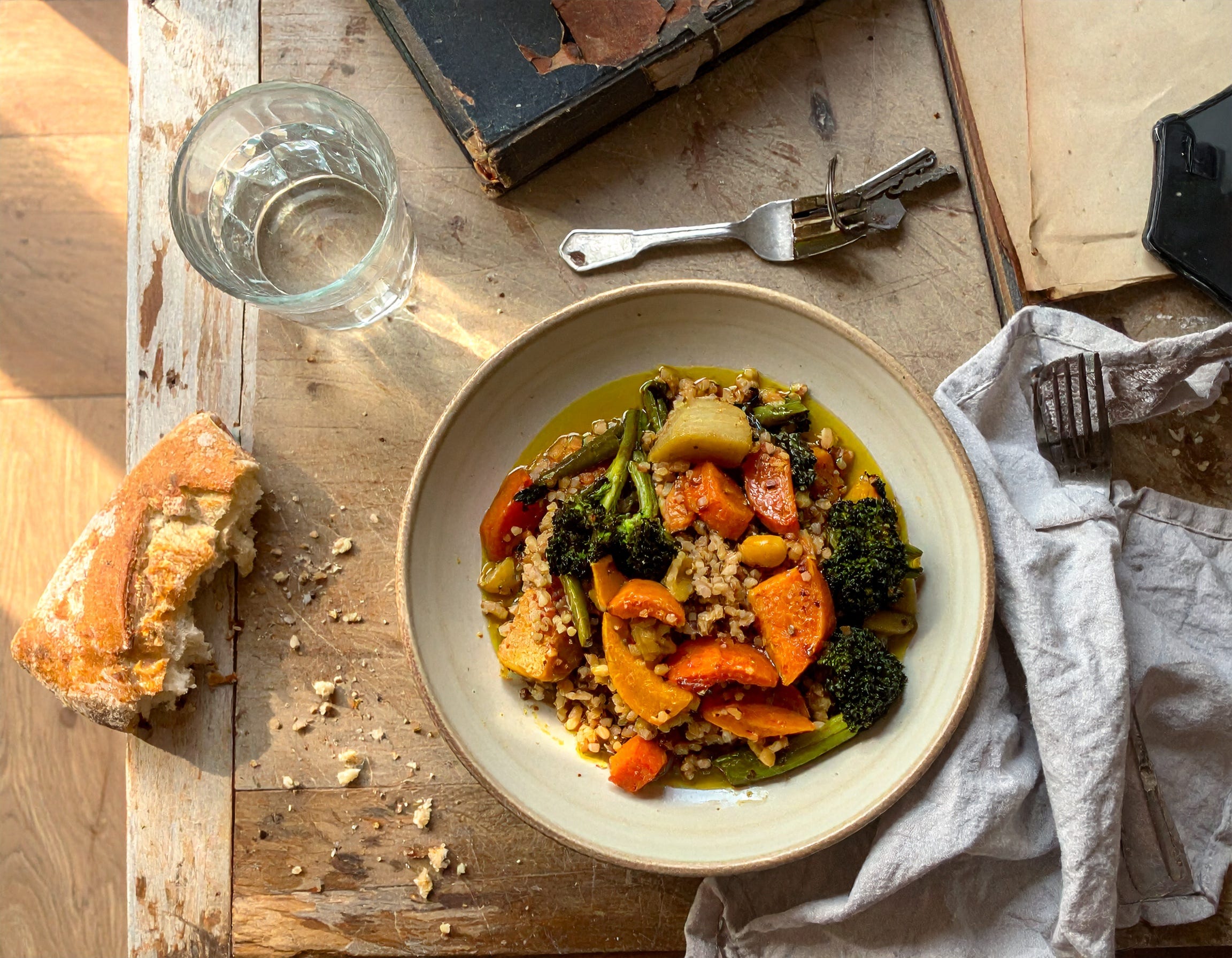
Somewhere in the last decade, food became a personality.
Not just a preference, not just a habit, not just a part of daily life that reflects, among many other things, your health priorities and cultural background and budget and schedule. A personality. A complete identity system, with its own tribes and values and aesthetics and moral hierarchies, capable of telling you — and everyone around you — exactly what kind of person you are.
You are what you eat, the old saying goes. We appear to have taken it literally.
The vegan who does not just avoid animal products but has organized their entire sense of self around the avoidance. The carnivore diet adherent who is not just eating meat but making a statement about masculinity, about rejecting mainstream health advice, about being the kind of person who does not go along with what they are told. The clean eater whose Instagram is a carefully curated record of every meal, every ingredient, every virtuous choice — a public performance of a private act that has become, somehow, their most defining characteristic.
These are extreme examples, but the underlying dynamic is everywhere, in milder and less visible forms. The person who introduces dietary restrictions before they introduce themselves at a dinner party. The person whose first question about a restaurant is whether there is anything healthy on the menu, said in a tone that communicates something about their values rather than just their preferences. The person who feels, quietly but persistently, that what they eat says something fundamental about who they are — and who experiences every deviation from their dietary standards as a threat not just to their health but to their identity.
This conflation of food and self is one of the most significant problems in the modern relationship with eating. And unpacking it is one of the most freeing things you can do.
How we got here
The equation of food and identity did not emerge from nowhere. It has roots in several converging forces that are worth understanding, because understanding them makes it easier to see the equation for what it is — a cultural construction, not a truth about how food and selfhood actually relate.
The first force is the wellness industry’s discovery that identity sells better than health. Telling someone that a particular way of eating will make them healthier is a moderately compelling pitch. Telling them that it will make them a different kind of person — more conscious, more evolved, more aligned with their values — is a much more compelling one. Identity is stickier than health outcomes, more emotionally resonant, more resistant to counter-evidence. Once your diet is part of who you are, changing it feels like a threat to your selfhood rather than just a change in eating habits.
The second force is social media, which turned eating into a public act on a scale that had never existed before. When meals are photographed and shared, they become statements. They invite interpretation. They signal things about values and lifestyle and status in a way that private eating never did. The audience changes the act — when other people are watching what you eat, what you eat starts to feel like a performance of who you are.
The third force is the genuine fragmentation of shared cultural food traditions, which leaves a vacuum that dietary identity rushes to fill. When there is no inherited cuisine, no shared food culture, no set of meals that everyone around you eats without question, food becomes something you have to figure out — and the frameworks people reach for to navigate that figuring out tend to be identity-based ones. You are not just choosing what to eat. You are choosing what kind of eater to be.
What the conflation costs
The cost of conflating food and identity shows up in several specific and damaging ways.
The first cost is rigidity. When your diet is part of your identity, changing it becomes threatening. New evidence about nutrition, new circumstances in your life, a body that is asking for something different — all of these require flexibility, the ability to adjust what you eat in response to changing information or changing needs. Dietary identity resists this flexibility, because adjusting what you eat feels like adjusting who you are. The result is people who continue eating in ways that no longer serve them because changing would feel like a loss of self.
The second cost is judgment — of yourself and others. When food is identity, dietary choices become moral choices, and moral choices invite moral evaluation. The person eating differently from you is not just making a different dietary choice. They are, implicitly, the wrong kind of person — less conscious, less healthy, less evolved, less aligned with the values that your dietary identity represents. This judgment is usually not intended and often not conscious, but it is there, and it damages both relationships and your own relationship with food.
The third cost is the fragility it creates. Identities built around external behaviors are vulnerable to the disruption of those behaviors. If your sense of self is tied to eating in a particular way, a period when you cannot eat that way — illness, travel, financial constraint, a difficult season in which the elaborate dietary framework simply cannot be maintained — becomes an identity crisis rather than just a difficult period. You are not just eating differently for a while. You are failing to be who you are.
The fourth cost is the sheer exhaustion of it. Maintaining a dietary identity is work — constant, vigilant, self-conscious work. Every meal is a statement. Every choice is a reflection of your values. Every deviation requires management, explanation, or guilt. Food becomes a full-time job of self-presentation, which is not what food is for and not what it needs to be.
What food actually is
Food is something you do. Multiple times a day, every day, for your entire life. It is a necessity that can be approached with more or less care, more or less pleasure, more or less intention. It reflects things about you — your culture, your budget, your health priorities, your cooking skills, your schedule — without defining you.
This distinction — reflecting versus defining — is the important one.
Your food choices reflect your circumstances and your values in the same way that your clothing choices or your neighborhood or your daily schedule reflects them. They are part of the picture of who you are, one set of data among many, telling a partial and context-dependent story. They are not the whole story. They are not even close to the most important part of the story.
The most important parts of who you are have nothing to do with food. Your capacity for love and care. Your integrity. Your curiosity. Your relationships. The way you treat people who cannot do anything for you. The things you would sacrifice for the people you love. The values you hold and act on when it costs you something. None of these are legible in your lunch.
And yet the dietary identity framework asks you to believe that your lunch is one of the most significant expressions of who you are. It is not. It is lunch.
Eating well without making it your identity
The good news is that caring genuinely about what you eat — wanting to nourish yourself well, cooking with intention, making food a source of pleasure and health rather than just fuel — does not require building an identity around it.
You can care about food without food being who you are. You can cook well without performing the cooking. You can eat nourishing meals without those meals being statements about your values. You can have strong preferences and genuine knowledge about food without organizing your entire sense of self around them.
The person who eats well without a dietary identity tends to be more flexible, more relaxed, and frankly more pleasant to eat with than the person whose eating is an expression of who they are. They can eat at a restaurant without interrogating the menu. They can attend a dinner party without complicated requirements. They can have a week of less careful eating without experiencing an identity crisis. They are free, in a way that dietary identity never allows, to just eat — well, mostly, with pleasure, without drama.
This freedom is available to anyone. It does not require abandoning your values or your preferences or your genuine care about what you eat. It just requires locating those things where they actually belong — in your choices, not in your identity. In what you do, not in who you are.
A word about belonging
It is worth acknowledging what dietary identity offers that is genuinely valuable before dismissing it entirely: community. The sense of belonging to a group of people who share your values, who eat the way you eat, who understand the framework you have adopted. This is real, and it matters.
But belonging built on dietary rules is fragile in the way that all identity-based belonging is fragile. It requires ongoing compliance with the rules to maintain the membership. It tends to become exclusionary — toward people who eat differently, toward former members who have changed their approach. It ties your sense of connection to other people to something as variable and personal as what you put on your plate.
Stronger belonging — the kind that lasts and nourishes — is built on shared values that are more fundamental than diet. The love of good food, the pleasure of cooking together, the care for each other’s wellbeing. These things can be expressed through food without being reducible to it. And they connect people across dietary differences in a way that dietary identity never quite manages.
What Joyvela believes about this
We do not have a dietary tribe here. We are not trying to recruit you to a way of eating that becomes part of how you define yourself.
What we are trying to do is make eating well easier, more pleasurable, and more sustainable — for whatever kind of person you are, whatever else defines you, whatever complicated and irreducible self you bring to the kitchen every night.
Your food is not your identity. Your identity is everything else — the full, rich, complicated, food-independent person you are before and after every meal.
Food is just what you eat. Make it good. Enjoy it. Let it be enough.